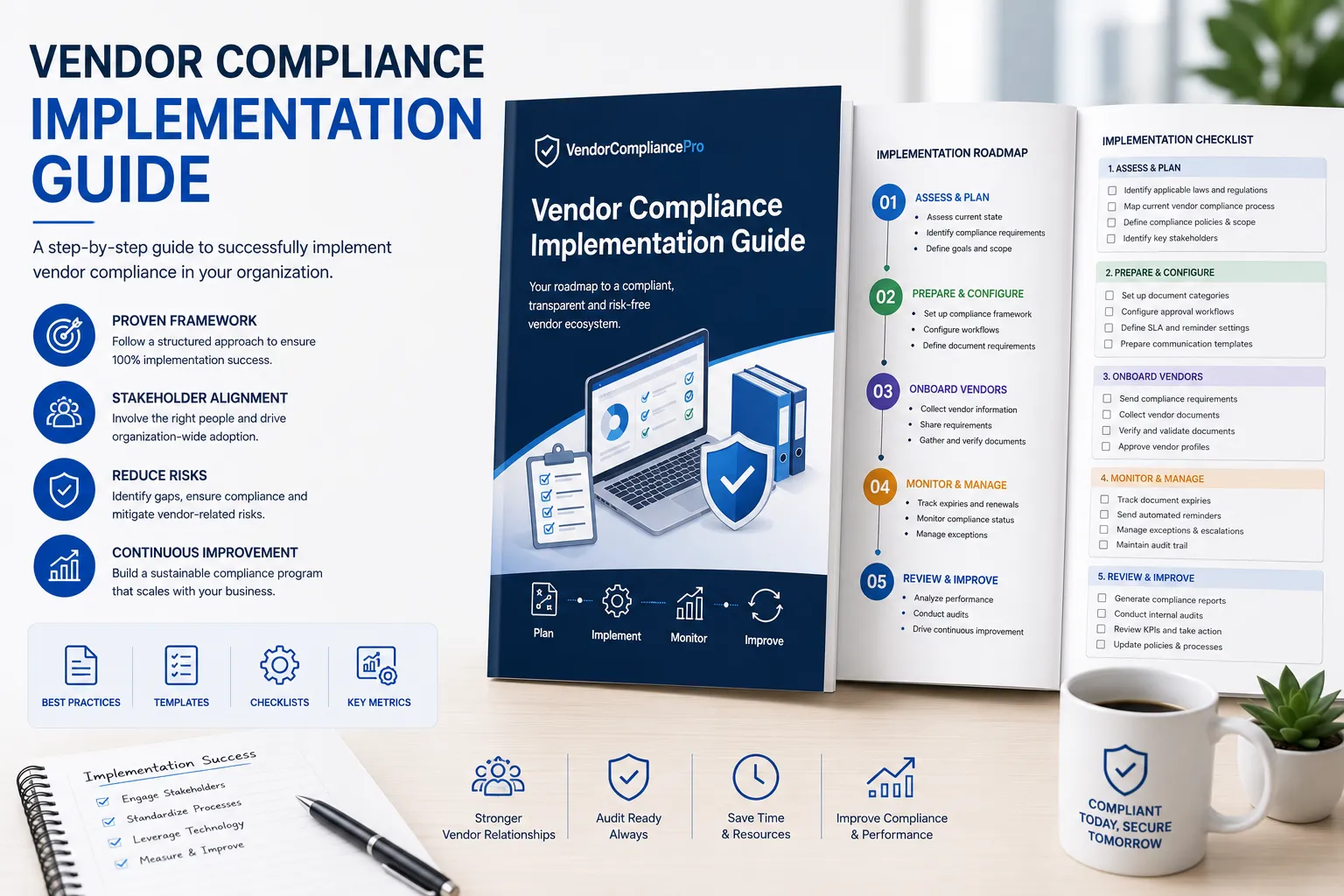
Vendor Compliance Implementation Guide
Implementing vendor compliance software is not just a technology project—it is an operational improvement initiative. A successful implementation helps organizations centralize vendor documents, automate compliance tracking, and prepare for audits with confidence.
This guide outlines the key steps for implementing a vendor compliance solution.
Why Implement Vendor Compliance Software?
Many organizations rely on spreadsheets, emails, and shared folders to manage vendor documents. As the number of suppliers grows, these manual processes become difficult to maintain.
A dedicated solution helps:
- Centralize vendor documents
- Track document expiry automatically
- Improve audit readiness
- Standardize vendor onboarding
- Reduce manual follow-ups
- Improve compliance visibility
Step 1 – Assess Your Current Process
Review your existing workflow:
- How are vendors onboarded?
- Which compliance documents are required?
- Who approves vendor documents?
- How are expiry dates tracked?
- How are audit reports prepared?
Documenting the current process helps identify improvement opportunities.
Step 2 – Define Compliance Requirements
Create a standard document checklist, such as:
- GST Registration
- PAN Card
- MSME Certificate
- PF Registration
- ESIC Registration
- Labour License
- Insurance Certificate
- ISO Certifications
- Signed Agreements
Adjust the checklist for your industry and regulatory requirements.
Step 3 – Configure the Software
Typical setup tasks include:
- Create departments
- Add internal users
- Define approval workflows
- Configure document categories
- Set expiry reminder rules
- Assign auditors
- Import existing vendor records
Step 4 – Migrate Vendor Data
Import:
- Vendor master data
- Existing documents
- Expiry dates
- Contact details
- Compliance status
Validate imported data before going live.
Step 5 – Train Users
Provide training for:
- Procurement teams
- Compliance officers
- Quality teams
- Internal auditors
- Vendor administrators
Simple onboarding reduces resistance and improves adoption.
Step 6 – Go Live
Start with a pilot group or department before rolling out to all vendors.
Monitor:
- Document uploads
- Approval turnaround time
- Expiry reminders
- Dashboard usage
- User feedback
Best Practices
- Use a standard onboarding checklist.
- Review expiring documents weekly.
- Schedule regular vendor audits.
- Keep approval workflows simple.
- Monitor compliance dashboards.
- Track corrective actions until closure.
Common Implementation Mistakes
- Migrating poor-quality data
- No document standards
- Ignoring user training
- Overcomplicating workflows
- Not reviewing reminder settings
- Delaying vendor communication
Why VendorCompliancePro?
VendorCompliancePro helps organizations implement vendor compliance quickly with:
- Vendor Document Management
- AI-powered Document Verification
- Automated Expiry Reminders
- Compliance Dashboards
- Approval Workflows
- Audit Reports
- Department-wise Auditor Assignment
- Unlimited Internal Users
- Free Onboarding & Training
Frequently Asked Questions
How long does implementation take?
The timeline depends on the number of vendors, existing data, and approval workflows. Many organizations can begin with a pilot implementation and expand in phases.
Do I need to migrate all historical documents?
Not necessarily. Many businesses start with active vendors and current compliance documents, then migrate older records if needed.
Can vendors upload their own documents?
Yes. A vendor self-service portal simplifies document submission and renewal.
Does VendorCompliancePro provide onboarding support?
Yes. Free onboarding and training are included to help teams adopt the platform effectively.
Related Articles
- Vendor Compliance Software Pricing
- Vendor Compliance Software Comparison
- Vendor Self-Service Portal
- Vendor Document Approval Workflow
- Vendor Audit Checklist PDF
Conclusion
A successful vendor compliance implementation combines the right software, standardized processes, and user adoption. By planning the rollout carefully and automating repetitive tasks, organizations can improve compliance, reduce manual effort, and remain audit-ready as their vendor network grows.