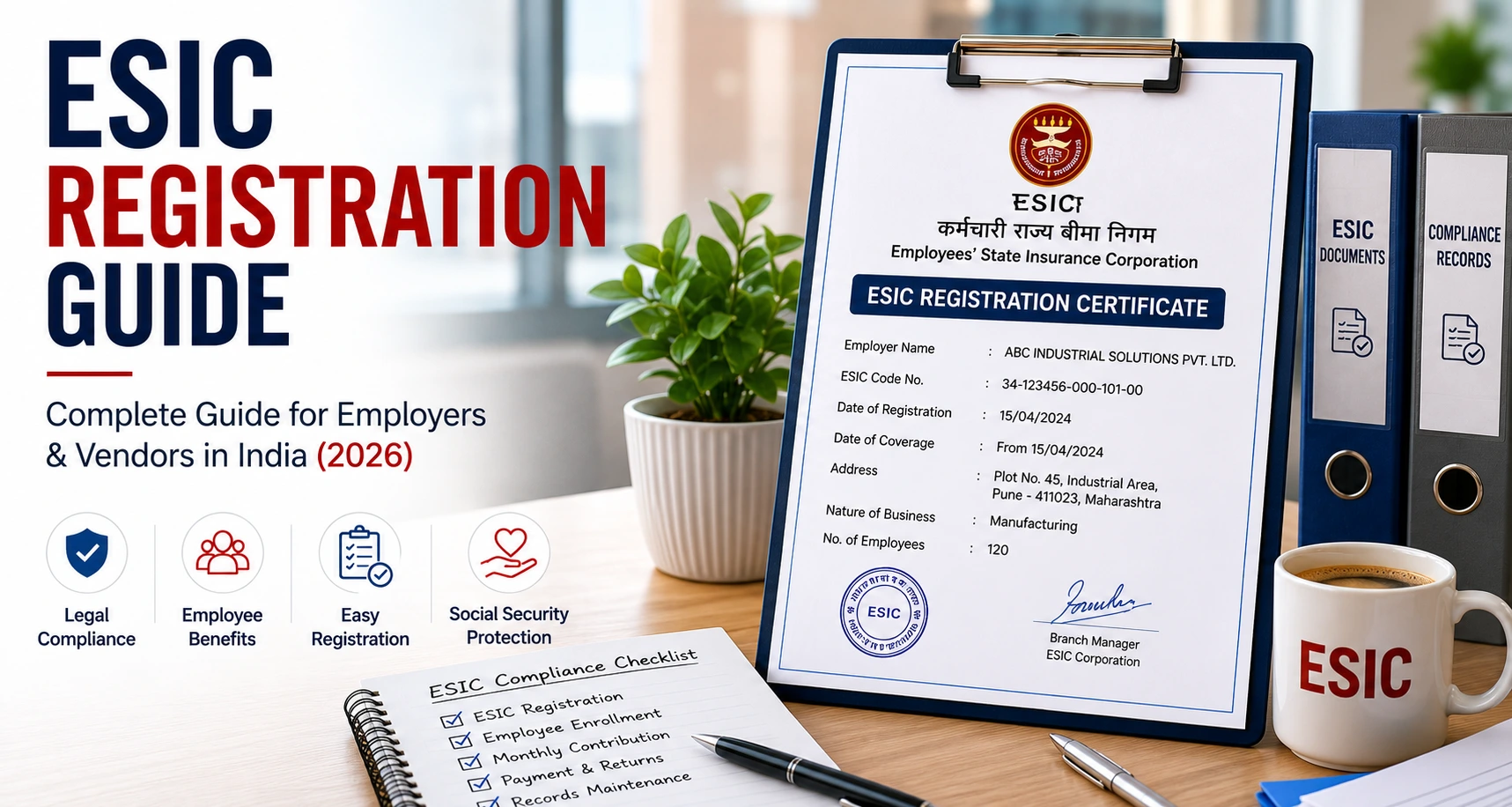
ESIC Registration Certificate Guide for Vendors: A Complete Compliance Guide
An ESIC Registration Certificate is one of the key statutory documents organizations request from contractors, suppliers, and service providers during vendor onboarding. It confirms that an eligible establishment is registered under the Employees’ State Insurance (ESI) scheme and complies with applicable social security regulations.
For procurement, HR, and compliance teams, verifying ESIC registration helps ensure that vendors meet statutory obligations, protects employee welfare, and reduces compliance risks.
In this guide, we’ll explain what an ESIC Registration Certificate is, why it is important, what information should be verified, and best practices for managing ESIC documents during vendor onboarding.
What Is an ESIC Registration Certificate?
An ESIC Registration Certificate is issued to eligible employers registered under the Employees’ State Insurance (ESI) scheme administered by the Employees’ State Insurance Corporation (ESIC).
The certificate confirms that an establishment has completed ESIC registration and is responsible for complying with applicable employee insurance requirements.
Organizations commonly request this document when onboarding contractors, manpower agencies, and labour-intensive service providers.
Why Is an ESIC Registration Certificate Important?
Collecting and verifying an ESIC Registration Certificate helps organizations ensure that vendors comply with applicable employment and social security regulations.
Benefits include:
- Labour law compliance
- Contractor verification
- Employee welfare compliance
- Reduced legal risks
- Better audit readiness
- Improved vendor due diligence
It is one of the core compliance documents requested during contractor onboarding.
Which Vendors Should Provide an ESIC Registration Certificate?
Organizations commonly request ESIC registration from:
- Labour contractors
- Manpower agencies
- Security service providers
- Housekeeping companies
- Facility management companies
- Engineering contractors
- Maintenance contractors
- Manufacturing service providers
- Industrial cleaning contractors
The requirement depends on applicable labour laws and the nature of the services provided.
Information Available on an ESIC Registration Certificate
An ESIC Registration Certificate generally includes:
- Employer Name
- Employer Code Number
- Registered Address
- Date of Registration
- Establishment Details
- ESIC Office Information
Procurement teams should ensure that these details match the vendor records maintained during onboarding.
What Should Procurement Teams Verify?
Before approving a vendor, organizations should verify the following information.
Employer Name
Confirm that the establishment name matches procurement records.
Employer Code Number
Verify that the ESIC Employer Code is complete and correctly recorded.
Registered Address
Ensure the registered address matches the vendor profile.
Supporting Documents
Cross-check ESIC details with:
- GST Registration Certificate
- PAN Card
- PF Registration Certificate
- Labour License (where applicable)
Vendor Records
Store verified documents securely within the organization’s vendor management system.
Common Challenges in Managing ESIC Documents
Many organizations continue to manage statutory documents manually.
Common challenges include:
Missing ESIC Certificate
Vendors fail to submit required documents during onboarding.
Incorrect Employer Information
Business names or addresses differ across statutory records.
Outdated Documents
Older certificates remain on file after organizational changes.
Scattered Records
Documents are stored across emails, shared drives, and local folders.
Time-Consuming Audits
Finding contractor compliance records becomes difficult during inspections.
Best Practices for Managing ESIC Registration Certificates
Organizations can improve compliance by following these best practices.
Collect Documents During Vendor Onboarding
Request the ESIC Registration Certificate before approving vendors.
Use a Standard Compliance Checklist
Ensure every applicable contractor submits the required statutory documents.
Store Documents in a Central Repository
Avoid scattered files and maintain secure document storage.
Conduct Periodic Compliance Reviews
Review vendor compliance records regularly to ensure information remains accurate.
Maintain Document History
Track document uploads, approvals, replacements, and updates for complete audit visibility.
Manual Process vs Automated Compliance Management
| Manual Process | Automated Process |
|---|---|
| Email attachments | Centralized document repository |
| Excel tracking | Compliance dashboard |
| Manual reminders | Automated notifications |
| Shared folders | Secure document storage |
| Difficult audits | Audit-ready reports |
| Limited visibility | Real-time compliance monitoring |
How VendorCompliancePro Helps
VendorCompliancePro simplifies statutory document management by providing:
- Vendor self-service document uploads
- Centralized document repository
- Approval workflows
- Compliance dashboards
- Audit-ready reports
- Role-based access
- Document history
- AI-powered document validation
Organizations can manage ESIC Registration Certificates together with GST Registration, PAN Cards, PF Registration Certificates, Labour Licences, insurance documents, and other vendor compliance records from one centralized platform.
Frequently Asked Questions
What is an ESIC Registration Certificate?
An ESIC Registration Certificate confirms that an eligible establishment is registered under the Employees’ State Insurance scheme administered by ESIC.
Which vendors should provide an ESIC Registration Certificate?
Organizations commonly request ESIC registration from contractors, manpower agencies, housekeeping companies, security service providers, and other labour-intensive vendors.
Why is ESIC registration important for vendor compliance?
It helps organizations verify statutory compliance, supports employee welfare requirements, and improves audit readiness.
Can vendor compliance software manage ESIC documents?
Yes. Vendor compliance software centralizes document storage, approval workflows, audit trails, compliance dashboards, and reporting for statutory documents.
Conclusion
An ESIC Registration Certificate is an essential compliance document for organizations working with contractors and service providers. Collecting and verifying this document helps improve statutory compliance, reduce operational risks, and strengthen vendor due diligence.
Instead of relying on spreadsheets and email attachments, organizations can simplify ESIC document management using a centralized vendor compliance platform that provides secure storage, automated workflows, and complete audit visibility.