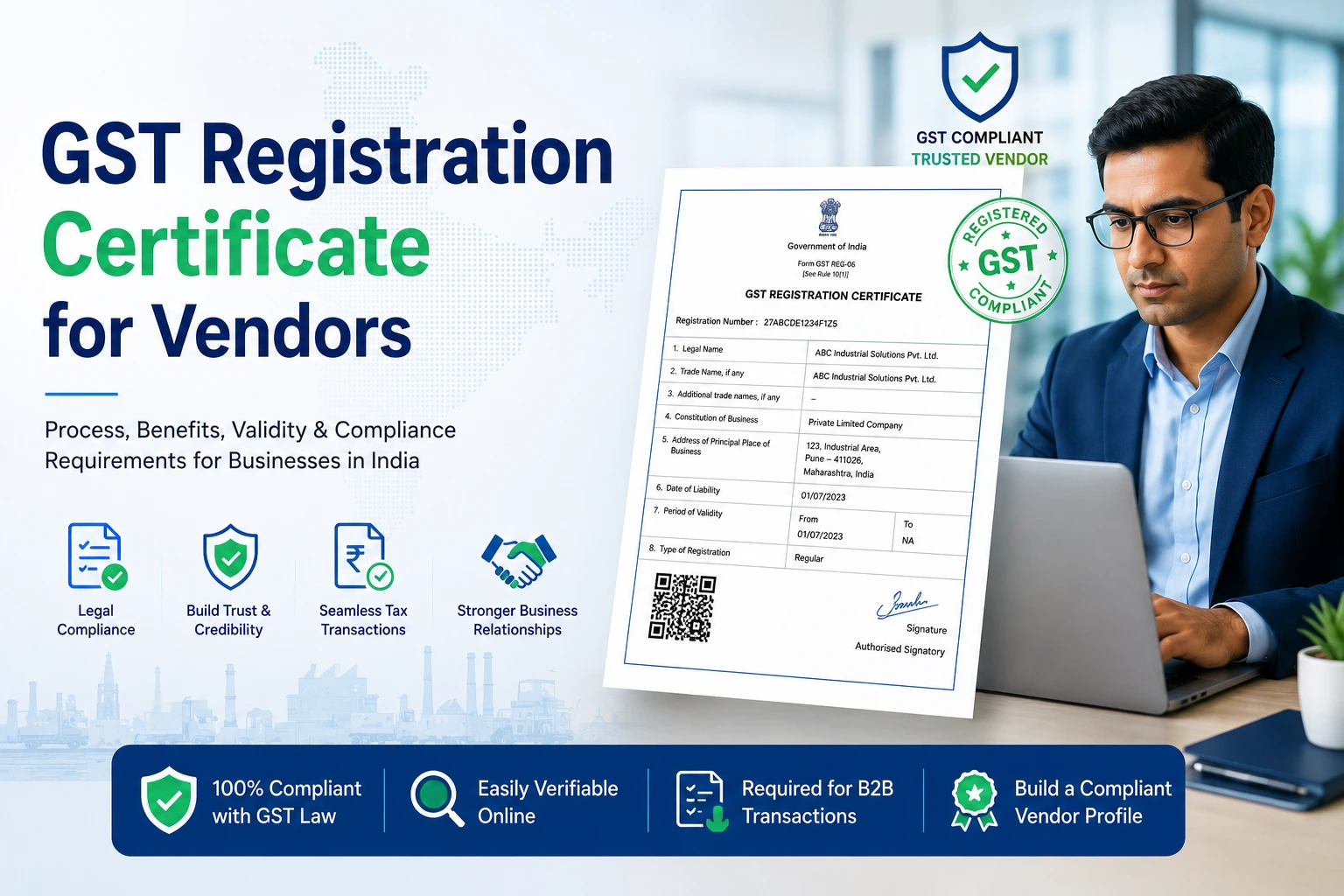
GST Registration Certificate for Vendors: Why It Matters for Vendor Compliance
A GST Registration Certificate is one of the first documents organizations request during vendor onboarding. It confirms that a supplier or contractor is registered under the Goods and Services Tax (GST) system and is authorized to collect and remit GST.
For procurement and compliance teams, verifying a vendor’s GST registration helps reduce financial risks, improve regulatory compliance, and maintain accurate vendor records.
In this guide, we’ll explain what a GST Registration Certificate is, why organizations request it, how to verify it, and best practices for managing GST documents.
What Is a GST Registration Certificate?
A GST Registration Certificate is an official document issued to businesses registered under the Goods and Services Tax (GST) Act in India.
The certificate includes important information such as:
- GST Identification Number (GSTIN)
- Legal Name of Business
- Trade Name
- Constitution of Business
- Principal Place of Business
- Date of Registration
- Jurisdiction Details
Organizations use this document to verify the identity and tax registration status of vendors before establishing a business relationship.
Why Is a GST Registration Certificate Important?
Requesting a GST Registration Certificate helps organizations ensure that vendors are operating as registered business entities.
Key benefits include:
- Vendor identity verification
- Tax compliance
- Accurate vendor master data
- Reduced procurement risk
- Better audit readiness
- Easier GST reconciliation
It is one of the most commonly requested documents during vendor onboarding.
Which Vendors Should Provide a GST Registration Certificate?
Organizations commonly request GST registration from:
- Suppliers
- Contractors
- Service providers
- Logistics companies
- Transport vendors
- Engineering contractors
- Facility management companies
- Manufacturing vendors
The exact requirement depends on the nature of the business relationship and applicable tax regulations.
Information Available on a GST Registration Certificate
A GST Registration Certificate generally contains:
- GSTIN
- Business Name
- Trade Name
- Constitution of Business
- Principal Place of Business
- State
- Date of Registration
- Jurisdiction
- QR Code (on current certificates)
Procurement teams should verify that the details match the vendor information provided during onboarding.
How to Verify a Vendor’s GST Registration
A simple document upload is not always sufficient. Organizations should verify that the registration details are valid and consistent.
A typical verification process includes:
Step 1: Collect the GST Registration Certificate
Request a copy during vendor onboarding.
Step 2: Verify Business Details
Check whether the following information matches vendor records:
- Business Name
- GSTIN
- Address
- State
Step 3: Verify Registration Status
Ensure that the GST registration is active and has not been cancelled or suspended.
Step 4: Store the Certificate
Maintain the certificate in a centralized vendor document repository for future audits.
Common Mistakes During GST Verification
Organizations frequently encounter the following issues.
Incorrect GST Number
The GSTIN entered in vendor records differs from the certificate.
Outdated Certificate
The vendor submits an old version after registration changes.
Incorrect Business Name
The legal business name does not match procurement records.
Missing GST Certificate
The vendor has not submitted the required registration document.
Duplicate Vendor Records
Multiple vendor profiles are created using different GST numbers.
Best Practices for Managing GST Certificates
Organizations should adopt a structured process.
Collect During Vendor Onboarding
Request the GST Registration Certificate before approving a vendor.
Store Documents Centrally
Maintain all GST certificates in a centralized document repository.
Review Periodically
Verify vendor information whenever major business details change.
Standardize Document Collection
Use a consistent onboarding checklist for every vendor.
Maintain Audit History
Record when documents were uploaded, reviewed, and approved.
Manual Process vs Automated Document Management
| Manual Process | Automated Process |
|---|---|
| Email attachments | Centralized repository |
| Shared folders | Secure document storage |
| Manual verification | Structured review workflow |
| Excel tracking | Real-time dashboard |
| Difficult audits | Audit-ready records |
How VendorCompliancePro Helps
VendorCompliancePro simplifies GST document management by providing:
- Vendor self-service document uploads
- Centralized document repository
- Approval workflow
- Vendor compliance dashboard
- Audit-ready reports
- AI-powered document validation
- Document history and audit trail
Organizations can manage GST certificates alongside other statutory compliance documents from a single platform.
Frequently Asked Questions
Is a GST Registration Certificate mandatory for every vendor?
It depends on the nature of the vendor’s business and applicable GST regulations. Organizations typically request GST registration from vendors who are required to be registered under GST.
Should organizations verify GST details before approving vendors?
Yes. Verifying vendor information helps maintain accurate records and supports procurement and compliance processes.
How often should GST documents be reviewed?
Organizations should review vendor information periodically and whenever significant business details change.
Can vendor compliance software manage GST documents?
Yes. Modern vendor compliance software centralizes GST certificates, approval workflows, audit trails, and compliance reporting.
Conclusion
A GST Registration Certificate is one of the most important documents collected during vendor onboarding. Maintaining accurate GST records helps organizations improve compliance, reduce procurement risks, and simplify audits.
Rather than managing GST certificates through emails and spreadsheets, organizations can benefit from a centralized vendor compliance system that securely stores documents, supports verification workflows, and provides complete visibility into vendor records.