Food Manufacturing Vendor Compliance: Complete Guide for Food Processing Companies (2026)
Food manufacturers depend on suppliers for raw materials, ingredients, packaging, logistics, sanitation services, cold chain transportation, and equipment. Every supplier should meet statutory, food safety, quality, and contractual requirements before becoming part of the supply chain.
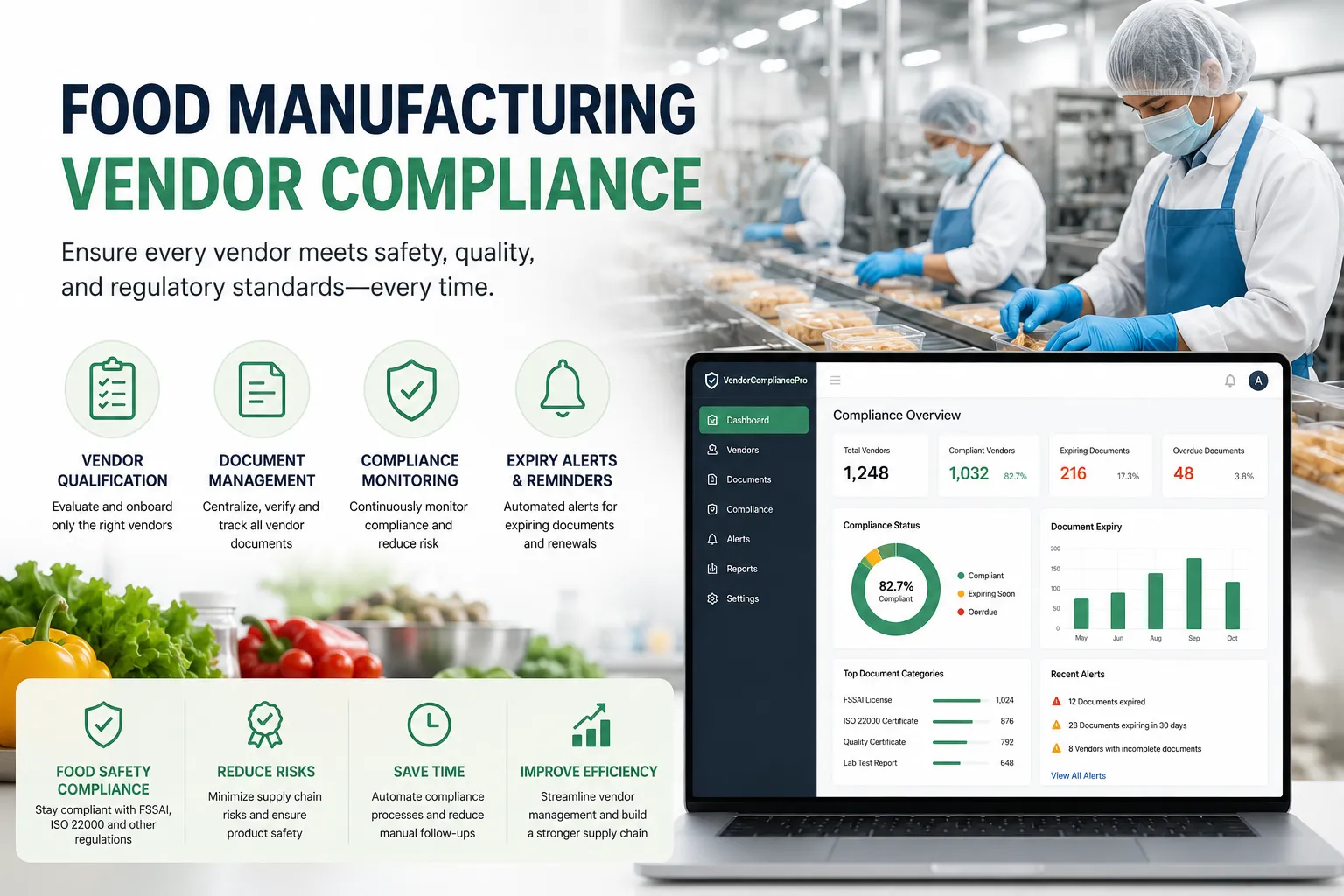
A structured Food Manufacturing Vendor Compliance process helps organizations verify supplier documents, monitor certificate renewals, improve audit readiness, and reduce supply chain risks.
What is Food Manufacturing Vendor Compliance?
Food Manufacturing Vendor Compliance is the process of ensuring suppliers meet legal, quality, safety, and contractual requirements throughout the vendor lifecycle. It includes supplier onboarding, document verification, approvals, renewal tracking, and ongoing compliance monitoring.
Why is It Important?
Without a structured compliance process, food manufacturers may face:
- Delayed supplier approvals
- Expired food safety certificates
- Audit observations
- Product recalls
- Supply chain disruptions
- Manual document follow-ups
| Manual Process | Automated Compliance |
|---|---|
| Email requests | Vendor Self-Service Portal |
| Spreadsheet tracking | Real-time dashboard |
| Paper files | Central repository |
| Manual reminders | Automated alerts |
| Reactive audits | Continuous compliance |
Who Should Use It?
| Business Type | Recommended |
|---|---|
| Food Manufacturers | ✅ |
| Food Processing Plants | ✅ |
| Beverage Companies | ✅ |
| Packaging Suppliers | ✅ |
| Cold Chain Logistics | ✅ |
| Ingredient Suppliers | ✅ |
Common Vendor Documents
Typical supplier documents include:
- GST Registration
- PAN Card
- FSSAI License
- Company Registration
- MSME Certificate
- ISO 22000 / HACCP Certificates
- PF Registration
- ESIC Registration
- Insurance Certificate
- Bank Details
- Quality Agreements
- Vendor Audit Reports
Food Vendor Compliance Workflow
- Supplier registration
- Document upload
- AI/OCR document validation
- Quality & compliance review
- Approval workflow
- Vendor activation
- Continuous monitoring
- Expiry reminders
- Supplier audits
Key Benefits
- Faster supplier onboarding
- Better food safety compliance
- Reduced audit preparation time
- Centralized document management
- Improved supplier visibility
- Automated renewal tracking
- Lower compliance risk
Essential Software Features
Choose software with:
- Vendor Self-Service Portal
- Compliance dashboard
- Document repository
- Approval workflows
- AI-powered document validation
- OCR processing
- Expiry reminders
- Audit trail
- Reports and analytics
- API integration
Real Food Manufacturing Example
A packaged food manufacturer works with more than 250 suppliers. Previously, procurement teams tracked FSSAI licenses, insurance policies, and supplier certifications using spreadsheets.
After implementing a centralized vendor compliance platform, suppliers uploaded documents directly, automated reminders reduced missed renewals, and dashboards highlighted non-compliant vendors before internal audits.
Buying Checklist
Before selecting software, ensure it includes:
- Vendor onboarding
- Document management
- Compliance tracking
- Approval workflows
- Expiry reminders
- Audit trail
- Reports
- Dashboard
- AI/OCR validation
- API support
Common Mistakes
- Manual document collection
- Missing certificate renewals
- No supplier audit schedule
- Spreadsheet-based tracking
- Duplicate vendor records
- No approval history
- Limited reporting
Best Practices
- Standardize document requirements by supplier type.
- Review critical suppliers regularly.
- Automate renewal reminders.
- Conduct periodic supplier audits.
- Maintain digital compliance records.
- Monitor compliance KPIs monthly.
Why VendorCompliancePro?
VendorCompliancePro helps food manufacturers automate supplier compliance with:
- Vendor Self-Service Portal
- Central document repository
- AI-powered document validation
- OCR processing
- Approval workflows
- Compliance dashboards
- Automated reminders
- Audit trails
- Reports and analytics
This enables procurement and quality teams to maintain supplier compliance while improving operational efficiency.
Frequently Asked Questions
What is Food Manufacturing Vendor Compliance?
It is the process of ensuring suppliers meet food safety, quality, statutory, and contractual requirements throughout the supplier lifecycle.
Which documents are commonly required?
Common documents include GST, PAN, FSSAI License, ISO 22000 or HACCP certificates, insurance, bank details, and applicable registrations.
Why automate supplier compliance?
Automation reduces manual work, improves visibility, minimizes missed renewals, and simplifies audit preparation.
Does VendorCompliancePro support food manufacturers?
Yes. VendorCompliancePro supports supplier onboarding, document management, compliance tracking, approval workflows, reminders, dashboards, and reporting.
Conclusion
Food Manufacturing Vendor Compliance is essential for maintaining food safety, regulatory compliance, and a reliable supply chain. By automating supplier onboarding, document management, approvals, and compliance monitoring, food manufacturers can reduce risk, improve efficiency, and stay audit-ready.