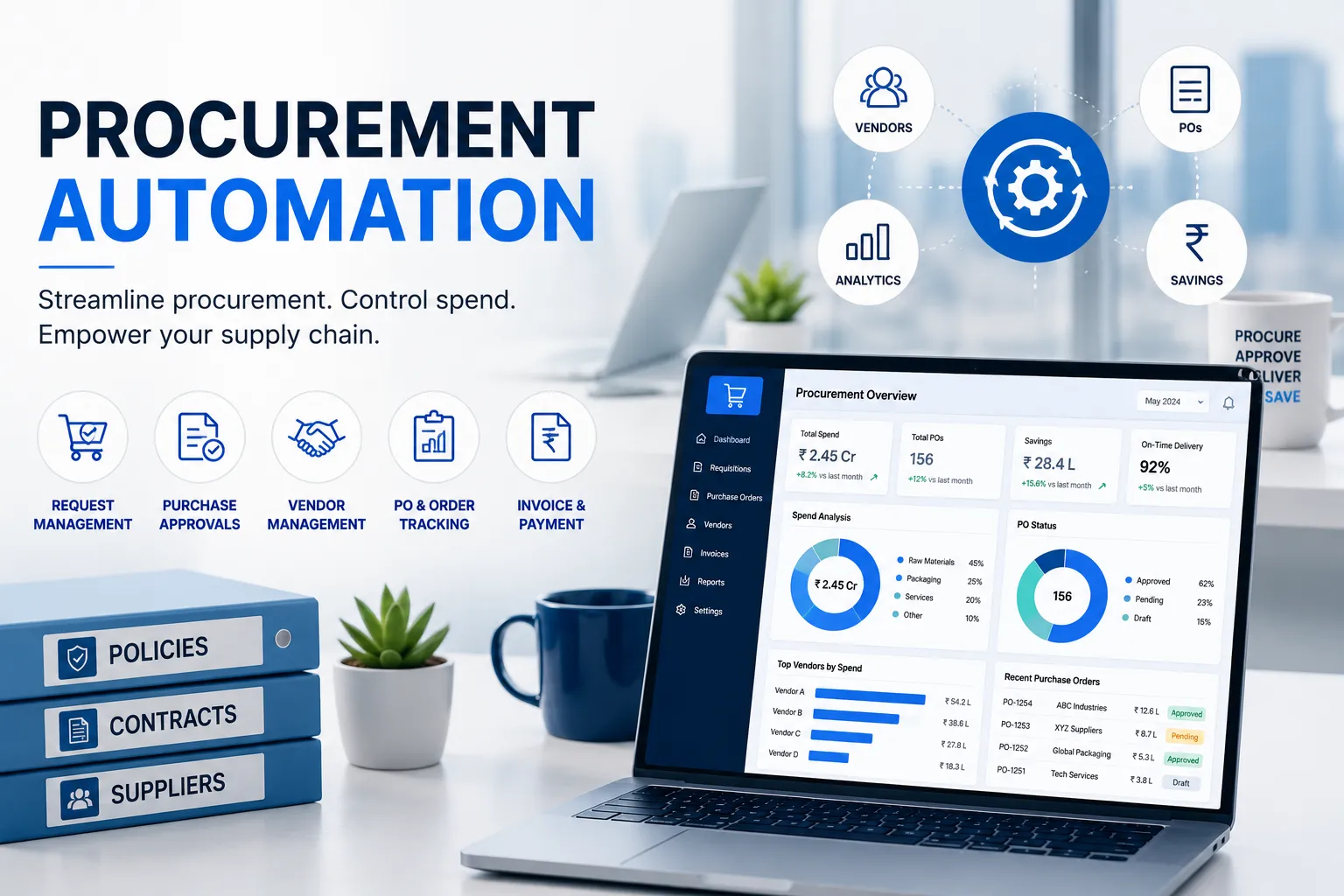
Procurement Automation: Complete Guide for Manufacturing Companies (2026)
Manual procurement processes often rely on emails, spreadsheets, paper approvals, and repetitive follow-ups. As organizations grow, these methods slow down purchasing, increase errors, delay approvals, and make vendor compliance difficult to manage.
Procurement Automation uses software to automate purchasing workflows, vendor onboarding, document collection, approvals, compliance tracking, and reporting. Instead of spending hours on administrative tasks, procurement teams can focus on supplier relationships and strategic purchasing.
For manufacturing companies, logistics providers, warehouses, engineering firms, and food processing businesses, procurement automation improves operational efficiency, reduces costs, and keeps procurement processes audit-ready.
What is Procurement Automation?
Procurement Automation is the use of digital tools to automate procurement activities from vendor registration to purchase approvals, document management, invoice verification, and supplier performance monitoring.
Instead of manually tracking every procurement task, organizations use centralized software to standardize workflows and improve visibility across the procurement lifecycle.
Why Procurement Automation Matters
Manual procurement creates several challenges:
- Slow approval processes
- Manual purchase requests
- Repetitive data entry
- Vendor document follow-ups
- Compliance issues
- Poor procurement visibility
- Increased processing costs
Automation helps eliminate these bottlenecks.
| Manual Procurement | Procurement Automation |
|---|---|
| Paper forms | Digital workflows |
| Email approvals | Automated approvals |
| Excel tracking | Real-time dashboards |
| Manual reminders | Automatic notifications |
| Scattered documents | Central repository |
Who Should Use Procurement Automation?
| Industry | Recommended |
|---|---|
| Manufacturing | ✅ |
| Logistics | ✅ |
| Warehousing | ✅ |
| Food Processing | ✅ |
| Automotive | ✅ |
| Engineering | ✅ |
| Construction | ✅ |
Organizations handling multiple suppliers and approval levels gain the greatest benefit.
Procurement Processes That Can Be Automated
Modern procurement software can automate:
- Vendor registration
- Vendor onboarding
- Compliance document collection
- Purchase requisitions
- Purchase approval workflows
- Document expiry reminders
- Contract renewals
- Supplier performance reviews
- Audit reporting
- Compliance dashboards
Key Benefits
Faster Purchase Approvals
Automated workflows reduce approval delays.
Improved Vendor Compliance
Mandatory documents are collected before purchases begin.
Reduced Administrative Work
Automation eliminates repetitive manual tasks.
Better Visibility
Dashboards provide real-time procurement status.
Stronger Audit Readiness
Every approval and document is stored with complete history.
Essential Features
Look for procurement automation software that includes:
- Vendor portal
- Vendor self-service
- Purchase approval workflow
- Compliance tracking
- Document management
- Approval hierarchy
- Automated notifications
- Audit trail
- Reports and dashboards
- AI/OCR document validation
- API integration
Real Manufacturing Example
A manufacturing company purchases raw materials from 250 suppliers. Previously, purchase approvals and vendor documents were managed through email and spreadsheets, causing delays and missing compliance records.
After implementing procurement automation, vendors register through a portal, upload required documents, approvals follow predefined workflows, and procurement managers receive dashboards showing vendor compliance and pending approvals in real time.
Procurement Automation Workflow
- Vendor registration
- Vendor document collection
- Compliance verification
- Purchase request
- Multi-level approval
- Purchase order creation
- Goods receipt
- Vendor performance review
- Compliance monitoring
Buying Checklist
Before selecting Procurement Automation software, ensure it includes:
- Vendor portal
- Purchase approval workflow
- Compliance management
- Document repository
- Automated reminders
- Dashboard and reporting
- Audit trail
- AI/OCR validation
- Role-based access
- API integration
Common Buying Mistakes
- Choosing software without workflow automation
- Ignoring vendor compliance
- Manual approval processes
- No audit trail
- Limited reporting
- Poor scalability
- No vendor portal
- No document expiry tracking
Best Practices
- Standardize procurement workflows.
- Define approval hierarchies.
- Automate vendor document collection.
- Monitor procurement KPIs monthly.
- Conduct periodic compliance reviews.
- Review supplier performance regularly.
Why VendorCompliancePro?
VendorCompliancePro helps manufacturing companies automate procurement and vendor compliance through:
- Vendor Self-Service Portal
- Vendor onboarding
- Compliance document management
- AI-powered document validation
- OCR processing
- Approval workflows
- Automated expiry reminders
- Procurement dashboards
- Audit trails
- Reports and analytics
The platform reduces manual work, accelerates procurement processes, and helps organizations remain compliant throughout the purchasing lifecycle.
Frequently Asked Questions
What is Procurement Automation?
It is the use of software to automate procurement activities such as vendor onboarding, approvals, compliance tracking, and reporting.
What are the benefits of Procurement Automation?
It reduces manual work, speeds up approvals, improves compliance, and provides better procurement visibility.
Is Procurement Automation suitable for SMEs?
Yes. Small and medium-sized businesses can save time, reduce errors, and improve operational efficiency.
Can Procurement Automation improve audit readiness?
Yes. It centralizes documents, approval history, and compliance records for faster audits.
Does VendorCompliancePro support Procurement Automation?
Yes. VendorCompliancePro provides vendor onboarding, compliance management, approval workflows, reminders, dashboards, and reporting from a centralized platform.
Conclusion
Procurement Automation enables organizations to replace manual procurement processes with efficient digital workflows. By automating vendor onboarding, compliance management, approvals, and reporting, businesses can reduce costs, improve efficiency, strengthen supplier relationships, and stay audit-ready.