Vendor Master Data Management: Complete Guide for Manufacturing Companies (2026)
As organizations grow, vendor information often becomes scattered across ERP systems, spreadsheets, emails, and paper records. Duplicate vendor entries, outdated contact information, missing compliance documents, and inconsistent payment details create unnecessary risks and slow down procurement operations.
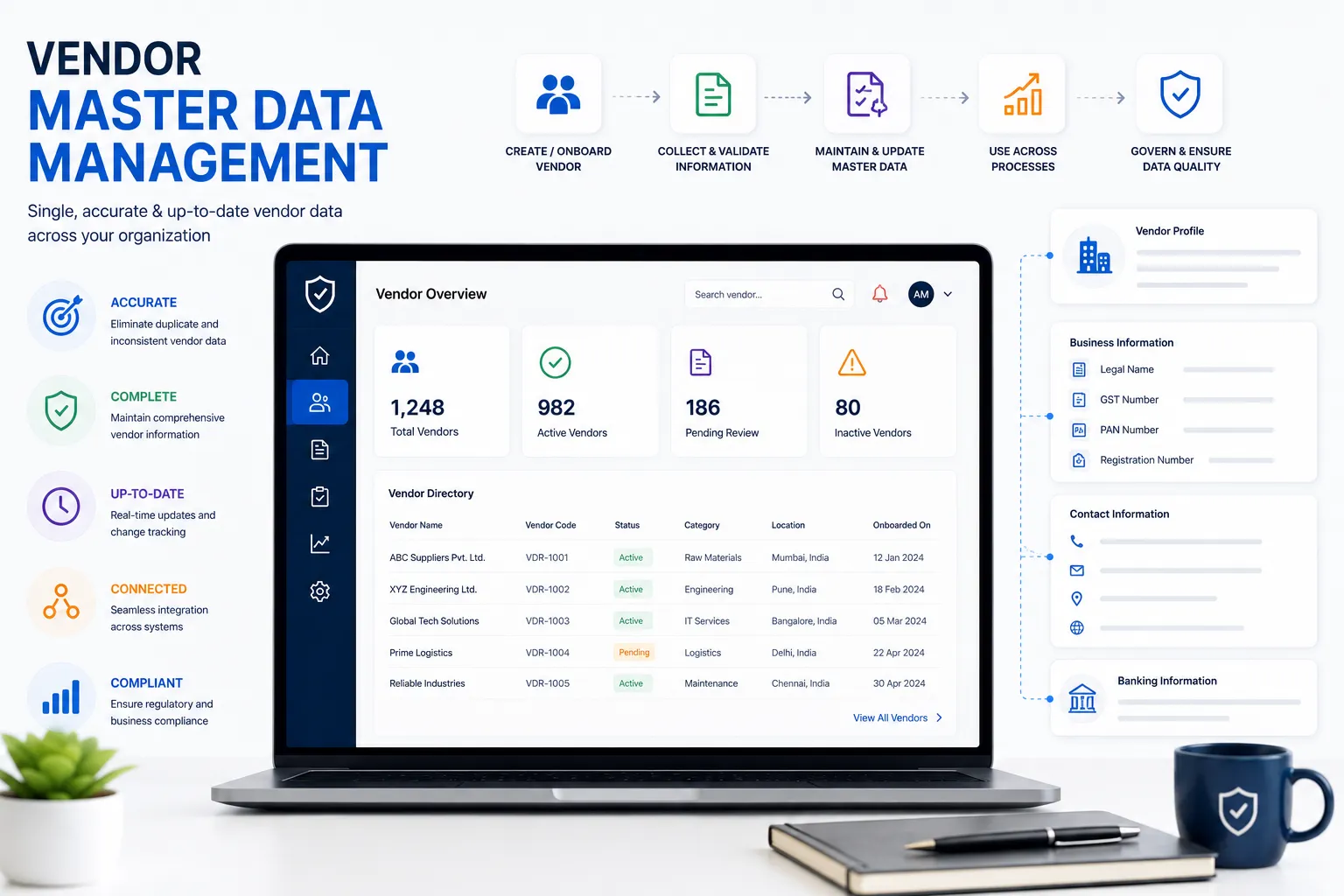
Vendor Master Data Management (Vendor MDM) is the process of creating, maintaining, and governing a single, accurate source of vendor information throughout the vendor lifecycle.
For manufacturing companies, logistics providers, warehouses, engineering firms, and food processing businesses, effective Vendor Master Data Management improves procurement efficiency, reduces compliance risks, and supports better business decisions.
What is Vendor Master Data Management?
Vendor Master Data Management is the practice of collecting, validating, maintaining, and updating vendor information in one centralized repository.
A vendor master record typically includes:
- Company name
- GST and PAN details
- MSME information
- Contact details
- Bank information
- Compliance documents
- Contract details
- Vendor category
- Risk classification
- Approval status
Instead of maintaining multiple versions of vendor information, organizations manage one trusted vendor profile.
Why Vendor Master Data Management Matters
Poor vendor data often leads to:
- Duplicate vendor records
- Incorrect payments
- Missing compliance documents
- Slow vendor onboarding
- Audit challenges
- Reporting inaccuracies
- Procurement delays
| Without Vendor MDM | With Vendor MDM |
|---|---|
| Duplicate vendors | Single vendor record |
| Scattered documents | Central repository |
| Manual updates | Controlled workflows |
| Inconsistent information | Accurate master data |
| Difficult audits | Audit-ready records |
Who Should Use Vendor Master Data Management?
| Industry | Recommended |
|---|---|
| Manufacturing | ✅ |
| Logistics | ✅ |
| Warehousing | ✅ |
| Food Processing | ✅ |
| Automotive | ✅ |
| Engineering | ✅ |
| Construction | ✅ |
Organizations managing more than 50 vendors benefit significantly from centralized vendor master data.
Information That Should Be Managed
A complete vendor master should include:
- Company profile
- GST registration
- PAN card
- MSME certificate
- Bank account details
- PF & ESIC registrations
- Labour license
- Insurance certificates
- Contact persons
- Contract dates
- Compliance status
- Performance score
- Risk level
Key Benefits
- Eliminate duplicate vendor records
- Improve data accuracy
- Faster vendor onboarding
- Better compliance visibility
- Simplified audits
- Better procurement reporting
- Stronger governance
Essential Features
Look for software that provides:
- Vendor Self-Service Portal
- Master data repository
- Duplicate vendor detection
- Approval workflows
- Document management
- Compliance tracking
- Document expiry reminders
- Audit trail
- Reports and dashboards
- AI/OCR document validation
- API integration
Real Manufacturing Example
A manufacturing company works with 500 suppliers across multiple plants. Vendor information was maintained in spreadsheets and separate ERP records, leading to duplicate vendors, outdated contact details, and missing compliance documents.
After implementing Vendor Master Data Management, every supplier had a single digital profile containing business details, compliance documents, approval history, and performance information. Procurement teams spent less time searching for information and more time managing supplier relationships.
Vendor Master Data Workflow
- Vendor registration
- Data validation
- Duplicate check
- Compliance document upload
- Approval workflow
- Vendor activation
- Continuous updates
- Periodic data review
- Archive inactive vendors
Buying Checklist
Before choosing Vendor Master Data Management software, ensure it includes:
- Central vendor repository
- Duplicate detection
- Approval workflows
- Compliance tracking
- Document management
- Automated reminders
- Audit trail
- Dashboards
- AI/OCR validation
- API integration
Common Mistakes
- Maintaining multiple vendor databases
- Allowing duplicate vendor creation
- Not validating vendor information
- Ignoring document expiry
- Manual spreadsheet updates
- Poor approval controls
- Limited reporting
- No audit history
Best Practices
- Maintain one vendor master record.
- Validate vendor data before approval.
- Review master data regularly.
- Automate document renewal reminders.
- Restrict unauthorized changes.
- Monitor data quality KPIs.
Why VendorCompliancePro?
VendorCompliancePro helps organizations build and maintain an accurate vendor master through:
- Vendor Self-Service Portal
- Central vendor repository
- Compliance document management
- AI-powered document validation
- OCR processing
- Automated expiry reminders
- Approval workflows
- Vendor dashboards
- Audit trails
- Reports and analytics
The platform ensures vendor information stays accurate, compliant, and ready for audits.
Frequently Asked Questions
What is Vendor Master Data Management?
It is the process of maintaining a single, accurate, and complete record for every vendor.
Why is Vendor MDM important?
It improves data quality, eliminates duplicate vendors, supports compliance, and simplifies procurement.
Can SMEs benefit from Vendor MDM?
Yes. Even growing businesses benefit from centralized vendor information and automated governance.
What information belongs in a vendor master?
Business details, tax information, bank details, compliance documents, contracts, contacts, and approval history.
Does VendorCompliancePro support Vendor Master Data Management?
Yes. VendorCompliancePro centralizes vendor records, compliance documents, approval workflows, reminders, dashboards, and reporting.
Conclusion
Vendor Master Data Management provides the foundation for efficient procurement and vendor compliance. By maintaining one trusted source of vendor information, organizations reduce errors, improve compliance, streamline audits, and make better procurement decisions.