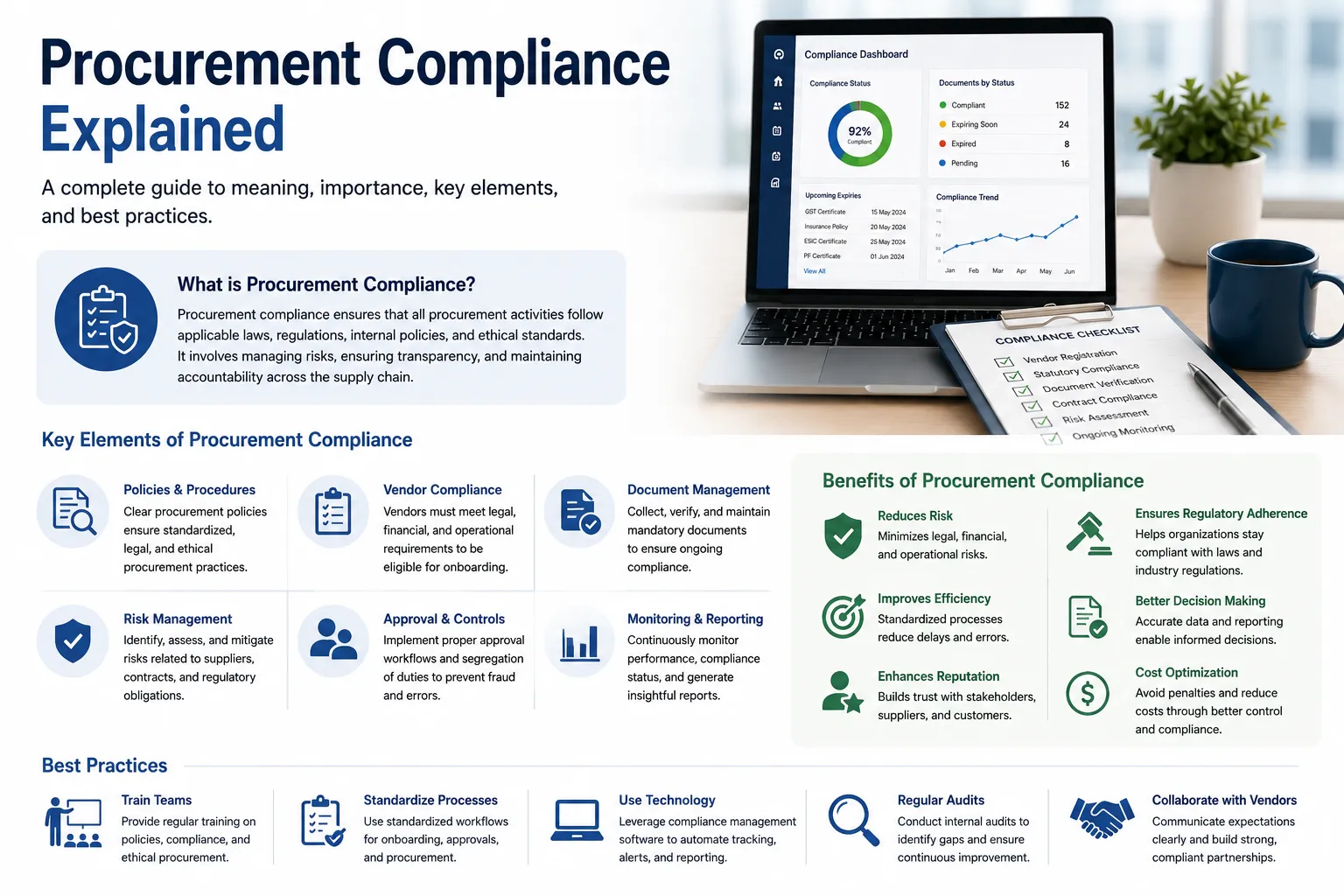
Procurement Compliance Explained: A Complete Guide
Procurement is much more than purchasing goods and services.
Every procurement process must comply with company policies, contractual obligations, industry regulations, and statutory requirements. Failing to follow these requirements can lead to financial losses, audit observations, legal penalties, and reputational damage.
This is where procurement compliance becomes essential.
Whether you’re managing suppliers, contractors, or service providers, procurement compliance helps ensure every purchasing activity follows defined rules and organizational standards.
In this guide, we’ll explain what procurement compliance is, why it matters, common challenges organizations face, and best practices for building a compliant procurement process.
What Is Procurement Compliance?
Procurement compliance is the process of ensuring that purchasing activities follow internal company policies, contractual obligations, legal regulations, and industry standards.
It covers every stage of the procurement lifecycle, including:
- Vendor selection
- Supplier qualification
- Vendor onboarding
- Contract management
- Purchase approvals
- Document verification
- Regulatory compliance
- Audit preparation
The objective is to ensure procurement activities are transparent, consistent, and compliant with applicable regulations.
Why Procurement Compliance Is Important
Organizations with strong procurement compliance processes experience fewer operational and regulatory risks.
Effective procurement compliance helps organizations:
- Reduce legal risks
- Prevent procurement fraud
- Improve supplier accountability
- Ensure policy adherence
- Prepare for audits
- Improve operational efficiency
- Strengthen vendor relationships
A structured procurement process also improves transparency across departments.
Who Needs Procurement Compliance?
Procurement compliance is important for organizations working with:
- Suppliers
- Contractors
- Service providers
- Logistics partners
- Manufacturing vendors
- Facility management companies
- Security agencies
- Housekeeping contractors
Industries that benefit include:
- Manufacturing
- Logistics
- Warehousing
- Engineering
- Construction
- Healthcare
- Pharmaceuticals
- Facility Management
What Does Procurement Compliance Include?
A comprehensive procurement compliance program typically includes the following activities.
Vendor Qualification
Ensure suppliers meet organizational standards before onboarding.
Vendor Onboarding
Collect required business information and statutory documents.
Compliance Verification
Review submitted documents for completeness and validity.
Contract Compliance
Ensure procurement activities follow contractual terms and conditions.
Purchase Approval
Verify purchasing follows internal approval workflows.
Document Management
Maintain organized compliance records.
Audit Preparation
Provide complete documentation for internal and external audits.
Common Compliance Documents
Organizations commonly collect the following documents from suppliers and contractors.
Business Registration Documents
- GST Registration Certificate
- PAN Card
- MSME Certificate
- Certificate of Incorporation
Statutory Documents
- PF Registration Certificate
- ESIC Registration Certificate
- Labour License
- Factory License
Insurance Documents
- Workmen Compensation Insurance
- Public Liability Insurance
- Professional Indemnity Insurance
Safety Documents
- Safety Training Records
- PPE Compliance Records
- Risk Assessment Reports
Employee Records
- Employee List
- Attendance Register
- Wage Register
- Salary Register
Procurement Compliance Process
A typical procurement compliance process includes several stages.
Step 1: Vendor Selection
Identify suppliers capable of meeting business requirements.
Step 2: Vendor Qualification
Evaluate supplier capability, financial stability, and regulatory compliance.
Step 3: Document Collection
Collect mandatory compliance documents.
Step 4: Verification
Validate submitted records before approval.
Step 5: Vendor Approval
Approve suppliers through defined workflows.
Step 6: Ongoing Compliance Monitoring
Track document validity and regulatory requirements.
Step 7: Audit Readiness
Maintain organized records for future audits.
Common Procurement Compliance Challenges
Many organizations still rely on manual processes.
This creates several operational challenges.
Manual Document Collection
Procurement teams spend significant time requesting documents.
Spreadsheet Tracking
Excel files become difficult to maintain as vendor numbers increase.
Missed Expiry Dates
Important compliance documents expire unnoticed.
Scattered Documentation
Compliance records are spread across multiple systems.
Audit Preparation
Collecting documents for audits becomes time-consuming.
Limited Visibility
Management struggles to identify non-compliant suppliers.
Manual Process vs Automated Procurement Compliance
| Manual Process | Automated Process |
|---|---|
| Excel spreadsheets | Centralized repository |
| Manual reminders | Automated notifications |
| Email follow-ups | Vendor self-service portal |
| Paper records | Digital document management |
| Manual reporting | Real-time dashboards |
| Time-consuming audits | Audit-ready reports |
Benefits of Procurement Compliance
Reduced Compliance Risk
Identify missing or expired documents before they become issues.
Better Audit Readiness
Maintain organized documentation throughout the year.
Increased Transparency
Track supplier compliance in real time.
Faster Vendor Onboarding
Accelerate document collection and approval.
Reduced Administrative Work
Automate repetitive procurement tasks.
Improved Supplier Relationships
Provide a structured and transparent onboarding experience.
Best Practices for Procurement Compliance
Define Procurement Policies
Create standardized procurement procedures.
Standardize Required Documents
Different supplier categories may require different compliance records.
Centralize Documentation
Store procurement documents in one secure location.
Automate Expiry Tracking
Avoid relying solely on spreadsheets and calendars.
Conduct Regular Compliance Reviews
Review supplier compliance every month or quarter.
Maintain Audit Trails
Track document uploads, approvals, and modifications.
How AI Is Transforming Procurement Compliance
Modern AI-powered procurement platforms help organizations:
- Automatically classify documents
- Extract important information
- Detect expiry dates
- Validate document types
- Identify missing information
- Reduce manual verification
AI allows procurement teams to spend less time reviewing paperwork and more time managing supplier relationships.
What Features Should Procurement Compliance Software Provide?
A modern procurement compliance solution should include:
- Centralized document repository
- Vendor self-service portal
- Automated expiry reminders
- Approval workflows
- Compliance dashboards
- Audit reports
- Role-based access
- Audit trails
- Document history
- AI-powered document validation
How VendorCompliancePro Helps
VendorCompliancePro helps organizations simplify procurement compliance through:
- Centralized vendor document management
- Vendor self-service portal
- Automated expiry reminders
- Compliance dashboards
- Approval workflows
- Audit-ready reporting
- Role-based access
- AI-powered document validation
Organizations can reduce manual work, improve compliance visibility, and remain audit-ready throughout the procurement lifecycle.
Frequently Asked Questions
What is procurement compliance?
Procurement compliance is the process of ensuring purchasing activities follow organizational policies, contractual obligations, and regulatory requirements.
Why is procurement compliance important?
It helps organizations reduce legal risks, improve transparency, prevent procurement errors, and maintain audit readiness.
What documents are commonly required?
Organizations typically collect GST registration, PAN card, MSME certificate, PF registration, ESIC registration, labour licenses, insurance policies, and employee records.
Can procurement compliance be managed using Excel?
Yes, but as organizations grow, automated procurement compliance software provides better visibility, scalability, and audit readiness.
Who is responsible for procurement compliance?
Procurement teams, compliance officers, finance departments, internal auditors, and business managers often share responsibility depending on organizational structure.
Conclusion
Procurement compliance is an essential part of effective supplier management.
By implementing standardized processes, maintaining complete documentation, and automating compliance activities, organizations can reduce operational risks, improve transparency, and stay audit-ready throughout the procurement lifecycle.
Modern procurement compliance software further simplifies document management, approval workflows, expiry tracking, and reporting—allowing procurement teams to focus on strategic supplier relationships rather than manual administrative work.
Related Articles
- What Is Vendor Compliance?
- Vendor Compliance vs Vendor Management
- Vendor Compliance Software India
- Vendor Document Management
- Vendor Audit Readiness Checklist