How Risk-Based Vendor Onboarding Saves Time and Reduces Compliance Risk
Not every vendor presents the same level of risk.
A stationery supplier and a hazardous waste disposal contractor shouldn’t go through the same onboarding process.
Yet many organizations apply identical document requirements, approval workflows, and compliance checks to every vendor.
The result?
- Longer onboarding times
- Unnecessary paperwork
- Delayed procurement
- Frustrated vendors
- Procurement teams overwhelmed with administrative work
Modern organizations are solving this problem through risk-based vendor onboarding.
Instead of treating every supplier equally, they tailor onboarding requirements based on the level of risk each vendor brings to the business.
What Is Risk-Based Vendor Onboarding?
Risk-based vendor onboarding is the practice of classifying vendors according to their potential operational, financial, legal, or compliance risk.
Higher-risk vendors undergo more detailed verification.
Lower-risk vendors follow a simplified onboarding process.
This approach allows procurement teams to focus their time where it matters most.
Why Traditional Vendor Onboarding Falls Short
Many organizations use a single checklist for every vendor.
Regardless of whether the vendor provides office supplies or performs high-risk industrial work, they are asked to submit the same documents.
This creates several problems:
- Unnecessary document collection
- Longer onboarding cycles
- Increased administrative effort
- Delays in vendor activation
- Poor vendor experience
Not every supplier requires the same level of scrutiny.
Examples of Vendor Risk Categories
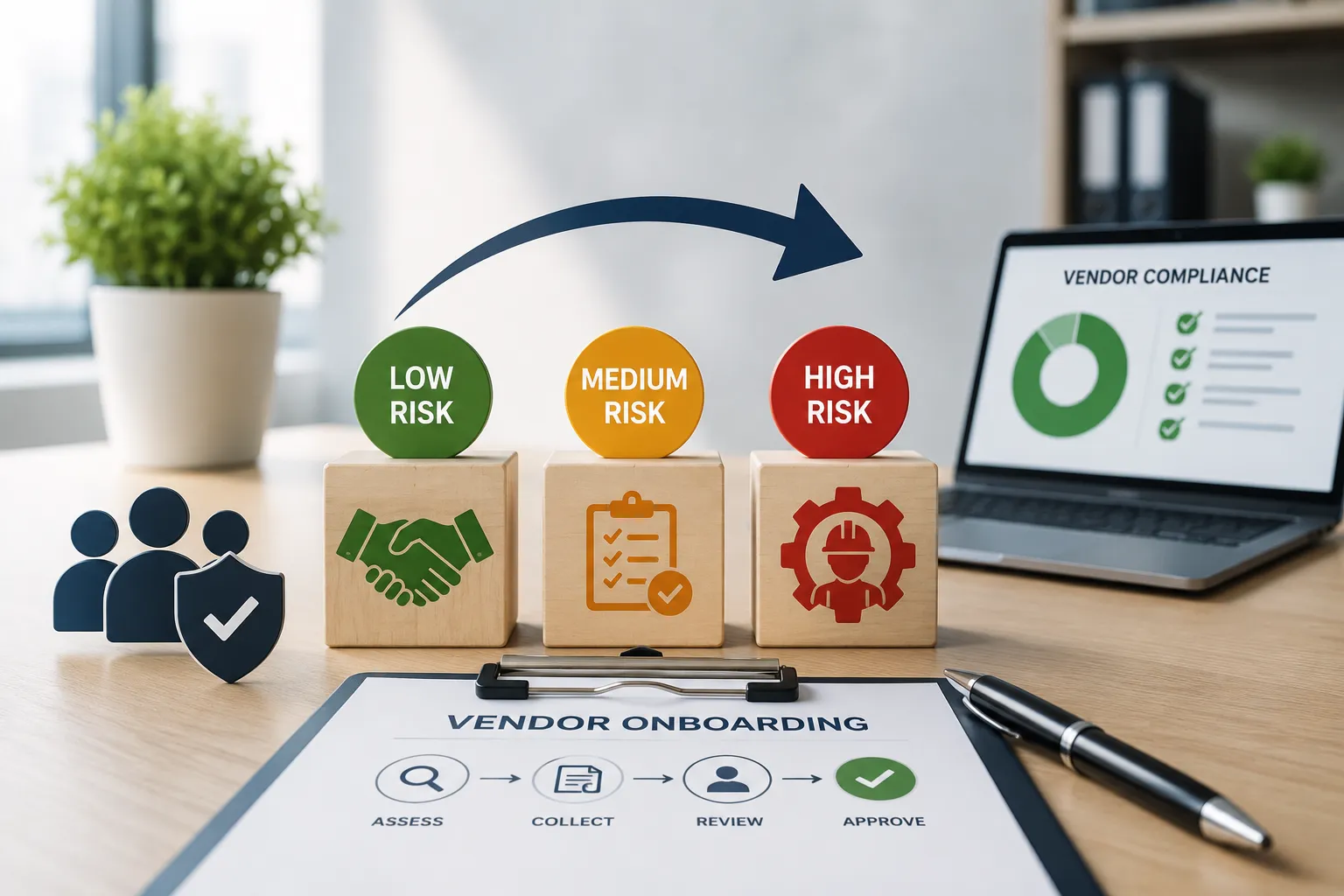
Organizations commonly classify vendors into three categories.
Low-Risk Vendors
Examples include:
- Office stationery suppliers
- Housekeeping suppliers
- Marketing agencies
- Training providers
Typical requirements:
- GST Registration
- PAN Card
- Bank Details
Medium-Risk Vendors
Examples include:
- Equipment suppliers
- Logistics providers
- Packaging vendors
- Service contractors
Additional requirements may include:
- Insurance Certificates
- MSME Certificate
- Quality Certifications
- Financial Information
High-Risk Vendors
Examples include:
- Labour contractors
- Construction contractors
- Chemical suppliers
- Waste management companies
- Security service providers
These vendors often require:
- Labour License
- PF Registration
- ESIC Registration
- Insurance Policies
- Safety Certifications
- Statutory Registrations
- Compliance Declarations
Benefits of Risk-Based Vendor Onboarding
1. Faster Vendor Onboarding
Low-risk vendors can be approved much more quickly because unnecessary documentation is eliminated.
Procurement teams spend less time reviewing documents that provide little value.
2. Better Compliance
High-risk vendors receive greater scrutiny where compliance matters most.
This reduces the likelihood of:
- Regulatory violations
- Audit findings
- Contractor compliance issues
- Operational disruptions
3. Improved Procurement Productivity
Instead of treating every vendor the same, procurement teams prioritize high-risk suppliers.
This improves efficiency without compromising compliance.
4. Better Vendor Experience
Suppliers appreciate straightforward onboarding.
Requesting only relevant documents makes the process easier and encourages faster submissions.
5. Reduced Administrative Costs
Manual document collection, follow-ups, and reviews consume significant time.
Risk-based onboarding reduces unnecessary work and allows teams to focus on strategic procurement activities.
Building a Risk-Based Vendor Onboarding Process
A successful approach typically includes the following steps.
Step 1: Categorize Vendors
Define clear risk categories based on:
- Industry
- Services provided
- Access to facilities
- Regulatory obligations
- Business criticality
Step 2: Define Document Requirements
Each risk category should have its own onboarding checklist.
For example:
Low Risk:
- GST Registration
- PAN Card
Medium Risk:
- GST Registration
- Insurance
- Bank Details
- MSME Certificate
High Risk:
- Labour License
- PF Registration
- ESIC Registration
- Insurance
- Safety Certifications
- Contractor Compliance Documents
Step 3: Automate Document Collection
Instead of emailing vendors individually, use a centralized portal where vendors upload required documents based on their assigned risk category.
Step 4: Review and Approve
Documents should be routed automatically to the appropriate reviewers before vendor activation.
Step 5: Monitor Compliance Continuously
Vendor compliance doesn’t end after onboarding.
Organizations should monitor:
- Document expiry
- Renewals
- Missing documents
- Compliance status
Continuous monitoring keeps vendors audit-ready throughout the relationship.
Common Mistakes to Avoid
Many organizations attempt risk-based onboarding but make avoidable mistakes.
Common examples include:
- Creating too many risk categories
- Applying identical checklists to all vendors
- Tracking compliance in Excel
- Relying entirely on manual follow-ups
- Failing to monitor document renewals
Keeping the process simple and automated delivers the best results.
Signs Your Organization Needs Risk-Based Onboarding
You may benefit from this approach if:
- Every vendor submits the same documents.
- Procurement spends excessive time reviewing paperwork.
- Vendor onboarding regularly takes weeks.
- Contractors require additional compliance verification.
- Audits frequently identify missing documentation.
- Procurement teams struggle to prioritize high-risk vendors.
How VendorCompliancePro Helps
VendorCompliancePro supports risk-based vendor onboarding by allowing organizations to create customized document requirements for different vendor categories.
Key capabilities include:
- Configurable onboarding checklists
- Vendor self-service portal
- Automated document collection
- AI-powered document validation
- Approval workflows
- Automated expiry reminders
- Compliance dashboards
- Complete audit history
This enables procurement teams to onboard vendors faster while maintaining strong compliance controls.
Frequently Asked Questions
What is risk-based vendor onboarding?
It is an approach where vendors are categorized by risk level, allowing organizations to apply different onboarding requirements based on compliance and operational risk.
Why is risk-based onboarding important?
It reduces unnecessary paperwork, speeds up onboarding, improves compliance, and allows procurement teams to focus on higher-risk suppliers.
Which vendors should receive the highest level of scrutiny?
Labour contractors, construction vendors, hazardous material suppliers, security providers, and vendors working on customer sites generally require more extensive compliance verification.
Can SMEs use risk-based onboarding?
Yes. Even small and medium-sized businesses benefit from simplifying onboarding for low-risk vendors while maintaining stronger controls for high-risk suppliers.
How does automation improve risk-based onboarding?
Automation ensures vendors receive the correct document requests, approvals are tracked, reminders are sent automatically, and compliance is monitored continuously.
Conclusion
Treating every vendor the same may seem fair, but it isn’t always efficient.
Risk-based vendor onboarding allows organizations to reduce unnecessary work, accelerate procurement, and strengthen compliance where it matters most.
By combining clear risk categories with automation, procurement teams can improve efficiency without sacrificing governance.
The goal isn’t to collect more documents.
It’s to collect the right documents from the right vendors at the right time.