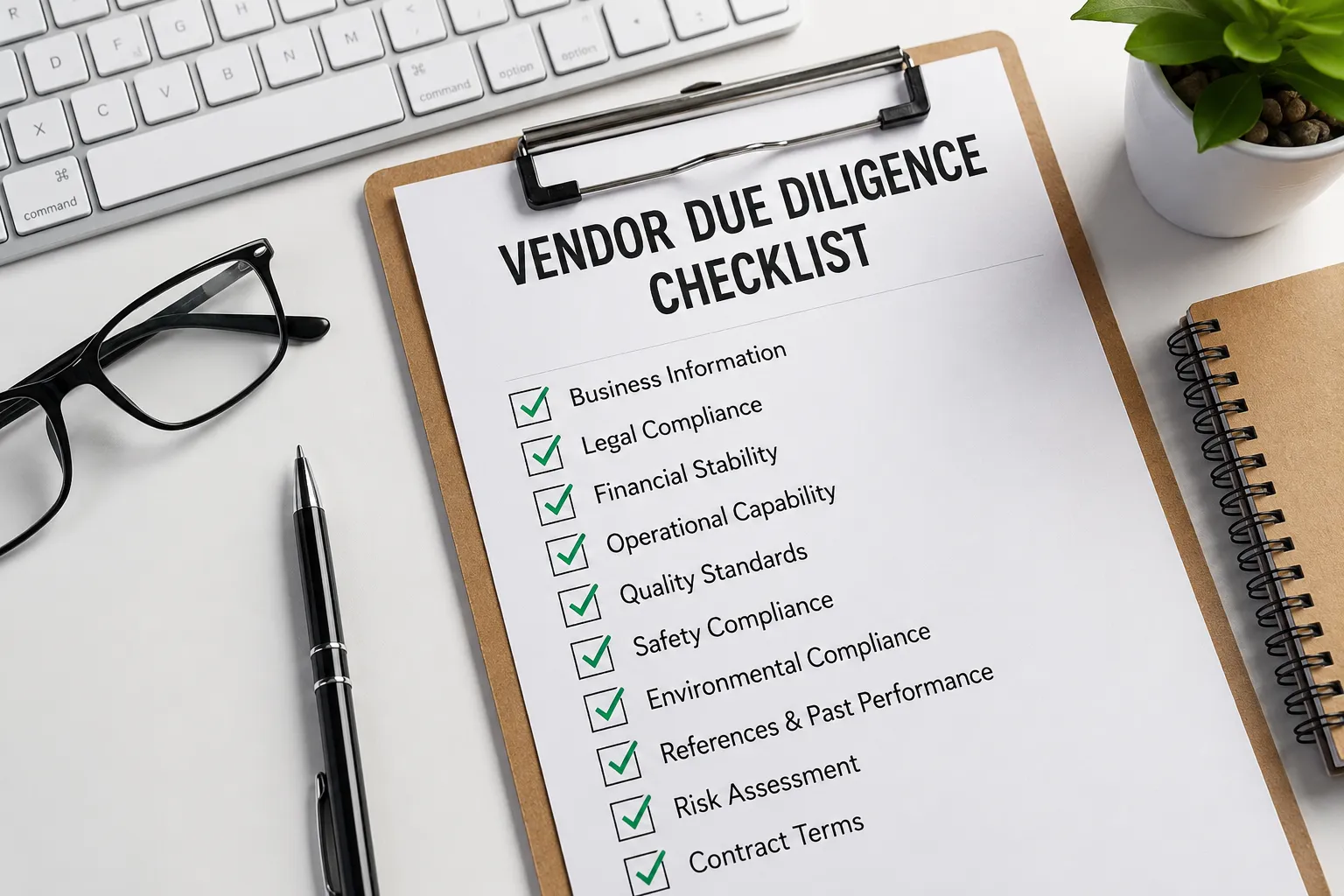
Vendor Due Diligence Checklist: Complete Guide for Indian Businesses (2026)
Choosing the right vendor is one of the most important decisions an organization makes. Whether you’re purchasing raw materials, hiring contractors, outsourcing services, or partnering with logistics providers, every vendor introduces a level of operational, financial, legal, and compliance risk.
Many organizations still select vendors based primarily on pricing or referrals. While cost is important, it should never be the only deciding factor. A vendor with missing statutory registrations, expired licenses, poor financial stability, or weak compliance practices can expose your business to regulatory penalties, supply chain disruptions, failed audits, and reputational damage.
This is where a structured Vendor Due Diligence Checklist becomes essential.
Vendor due diligence helps procurement and compliance teams verify that suppliers meet legal, financial, operational, and compliance requirements before they are approved. It creates a standardized onboarding process that reduces risk, improves transparency, and ensures every vendor is evaluated fairly.
In this guide, you’ll learn:
- What vendor due diligence is
- Why it is important
- A complete vendor due diligence checklist
- Best practices for evaluating suppliers
- Common mistakes to avoid
- Frequently asked questions
Why Vendor Due Diligence Matters
Organizations today work with multiple types of external vendors, including:
- Raw material suppliers
- Contractors
- Transport vendors
- Warehousing partners
- Security agencies
- Housekeeping companies
- Equipment maintenance providers
- IT service providers
- Facility management companies
As the number of vendors increases, so does the complexity of managing compliance.
Without a standardized due diligence process, organizations often face challenges such as:
- Vendors submitting incomplete documentation
- Expired licenses going unnoticed
- Contractor compliance violations
- GST or statutory registration issues
- Missing insurance certificates
- Poor supplier performance
- Delays during internal or customer audits
A structured vendor due diligence process helps organizations identify these risks before a vendor is approved.
Benefits of Vendor Due Diligence
A well-defined vendor due diligence process offers several advantages.
- Reduces supplier risk
- Improves regulatory compliance
- Standardizes vendor onboarding
- Ensures only qualified vendors are approved
- Improves audit readiness
- Protects business reputation
- Reduces operational disruptions
- Builds stronger supplier relationships
Organizations that implement a standardized due diligence process are generally better prepared for customer audits, ISO certifications, and regulatory inspections.
Vendor Due Diligence Checklist
Before approving any supplier or contractor, procurement teams should verify the following areas.
1. Company Verification
The first step is to confirm that the vendor is a legally registered business.
Typical documents include:
- Certificate of Incorporation
- PAN Card
- GST Registration Certificate
- Udyam Registration Certificate (MSME)
- Partnership Deed (if applicable)
- Proprietorship Declaration
- Company Address Proof
These documents establish the legal identity of the supplier.
2. Tax and Statutory Compliance
Verify that the vendor complies with applicable tax and labour regulations.
Common documents include:
- GST Registration Certificate
- PAN Card
- Professional Tax Registration
- Shops & Establishment Registration
- Labour Department Registration
- TDS-related documents (where applicable)
For manpower contractors, additional labour compliance documents may also be required.
3. Business Licenses
Depending on the industry, vendors may require operational licenses.
Examples include:
- Factory License
- Labour License
- Trade License
- Fire NOC
- Pollution Control Board Consent
- FSSAI License
- Drug License
- Electrical Contractor License
Always verify the validity and expiry dates of these licenses.
4. Financial Stability
A financially unstable supplier may struggle to deliver products or services consistently.
Evaluate factors such as:
- Annual turnover
- Audited financial statements
- Bank references
- Credit history
- Years in business
- Existing customer portfolio
Financial due diligence is especially important for strategic or high-value vendors.
5. Insurance Coverage
Adequate insurance protects both the vendor and your organization.
Review policies such as:
- Public Liability Insurance
- Workmen Compensation Insurance
- Professional Indemnity Insurance
- Product Liability Insurance
- General Liability Insurance
Ensure policies are active and provide sufficient coverage.
6. Compliance Documents
Collect mandatory compliance documents based on the vendor’s business category.
Examples include:
- PF Registration Certificate
- ESIC Registration Certificate
- Labour License
- Monthly PF Challans
- Monthly ESIC Challans
- Employee Insurance Records
- Wage Registers
- Attendance Registers
Contractor vendors generally require more extensive compliance documentation than product suppliers.
7. Quality Certifications
Quality certifications indicate that vendors follow recognized management systems.
Examples include:
- ISO 9001
- ISO 14001
- ISO 45001
- ISO 27001
- IATF 16949
- GMP Certification
While not mandatory for every supplier, these certifications increase confidence in vendor capabilities.
8. Operational Capability
Assess whether the vendor has the resources to fulfill your requirements.
Review:
- Manufacturing capacity
- Workforce size
- Equipment availability
- Geographic reach
- Delivery capability
- Previous project experience
- Technical expertise
This assessment helps ensure the vendor can support future business growth.
9. Reference Checks
Customer references provide valuable insights into vendor performance.
Questions to ask include:
- Were deliveries made on time?
- Was product quality consistent?
- How responsive was the vendor?
- Were compliance issues handled promptly?
- Would you work with this supplier again?
Reference checks often reveal issues not visible in documentation alone.
10. Site Assessment (If Required)
For critical suppliers, an on-site visit can provide additional confidence.
During the visit, evaluate:
- Production facilities
- Warehouse conditions
- Safety practices
- Quality control processes
- Documentation systems
- Employee welfare
- Equipment maintenance
A physical inspection helps validate the information provided during the evaluation process.
Vendor Due Diligence Checklist Summary
| Area | What to Verify | Example Documents |
|---|---|---|
| Company Verification | Legal identity | Certificate of Incorporation, PAN, GST |
| Tax Compliance | Statutory registrations | GST, Professional Tax |
| Business Licenses | Legal operation | Factory License, Labour License |
| Financial Health | Stability | Financial Statements |
| Insurance | Risk protection | Liability Insurance |
| Compliance | Labour compliance | PF, ESIC, Challans |
| Certifications | Quality standards | ISO Certificates |
| Capability | Operational strength | Workforce, Equipment |
| References | Performance history | Customer References |
| Site Visit | Infrastructure | Factory Inspection Report |
Best Practices for Vendor Due Diligence
Organizations with mature vendor compliance programs typically follow these best practices.
- Use a standardized vendor onboarding checklist.
- Verify all statutory registrations before approval.
- Validate expiry dates of licenses and certificates.
- Maintain a centralized document repository.
- Review vendor compliance periodically.
- Categorize vendors based on business risk.
- Maintain an approval workflow with proper audit trails.
- Automate document expiry reminders instead of relying on spreadsheets.
These practices help ensure consistency and reduce the likelihood of approving non-compliant vendors.
Common Mistakes to Avoid
Many organizations perform vendor due diligence only once during onboarding. However, compliance is an ongoing process.
Common mistakes include:
- Selecting vendors based only on price.
- Accepting expired licenses.
- Failing to verify GST registration.
- Ignoring insurance validity.
- Not reviewing contractor compliance documents.
- Managing vendor documents through emails and spreadsheets.
- Missing document renewal deadlines.
- Conducting due diligence only during audits.
Avoiding these mistakes significantly improves supplier compliance and reduces operational risk.
Why Many Organizations Move Beyond Excel
While spreadsheets may work for a small number of vendors, they become difficult to manage as vendor counts increase.
Challenges of Excel-based tracking include:
- Manual follow-ups
- Missed renewal dates
- Duplicate documents
- No approval workflow
- Limited visibility
- Difficult audit preparation
Many organizations adopt dedicated vendor compliance software to centralize documents, automate reminders, and simplify vendor onboarding.
Frequently Asked Questions
What is vendor due diligence?
Vendor due diligence is the process of evaluating a supplier before approval. It includes verifying legal registrations, financial stability, compliance documents, licenses, certifications, and operational capabilities.
Why is vendor due diligence important?
Vendor due diligence helps organizations reduce supplier risk, improve compliance, prevent operational disruptions, and ensure only qualified vendors are approved.
What documents should be collected during vendor due diligence?
Common documents include GST Registration Certificate, PAN Card, Udyam Registration, Factory License, Labour License, PF Registration, ESIC Registration, insurance certificates, and quality certifications such as ISO 9001.
How often should vendor due diligence be performed?
Vendor due diligence should not be a one-time activity. Organizations should review vendor compliance periodically, especially before document expiry, contract renewals, or major business engagements.
Is vendor due diligence only for large enterprises?
No. Small and medium-sized businesses also benefit from vendor due diligence. Even organizations managing 20–50 vendors can reduce compliance risks by implementing a structured evaluation process.
Can vendor due diligence be automated?
Yes. Modern vendor compliance software can centralize vendor documents, automate document expiry reminders, manage approval workflows, and provide real-time compliance dashboards, reducing manual effort and improving audit readiness.
Conclusion
Vendor due diligence is far more than a document collection exercise. It is a structured process that helps organizations evaluate supplier reliability, compliance, financial stability, and operational capability before entering into a business relationship.
By implementing a standardized vendor due diligence checklist, procurement and compliance teams can reduce supplier risk, improve audit readiness, and establish a more consistent vendor onboarding process.
As businesses grow and vendor networks expand, managing due diligence manually through spreadsheets and emails becomes increasingly challenging. Dedicated vendor compliance software can simplify document management, automate reminders, and provide greater visibility into supplier compliance throughout the vendor lifecycle.