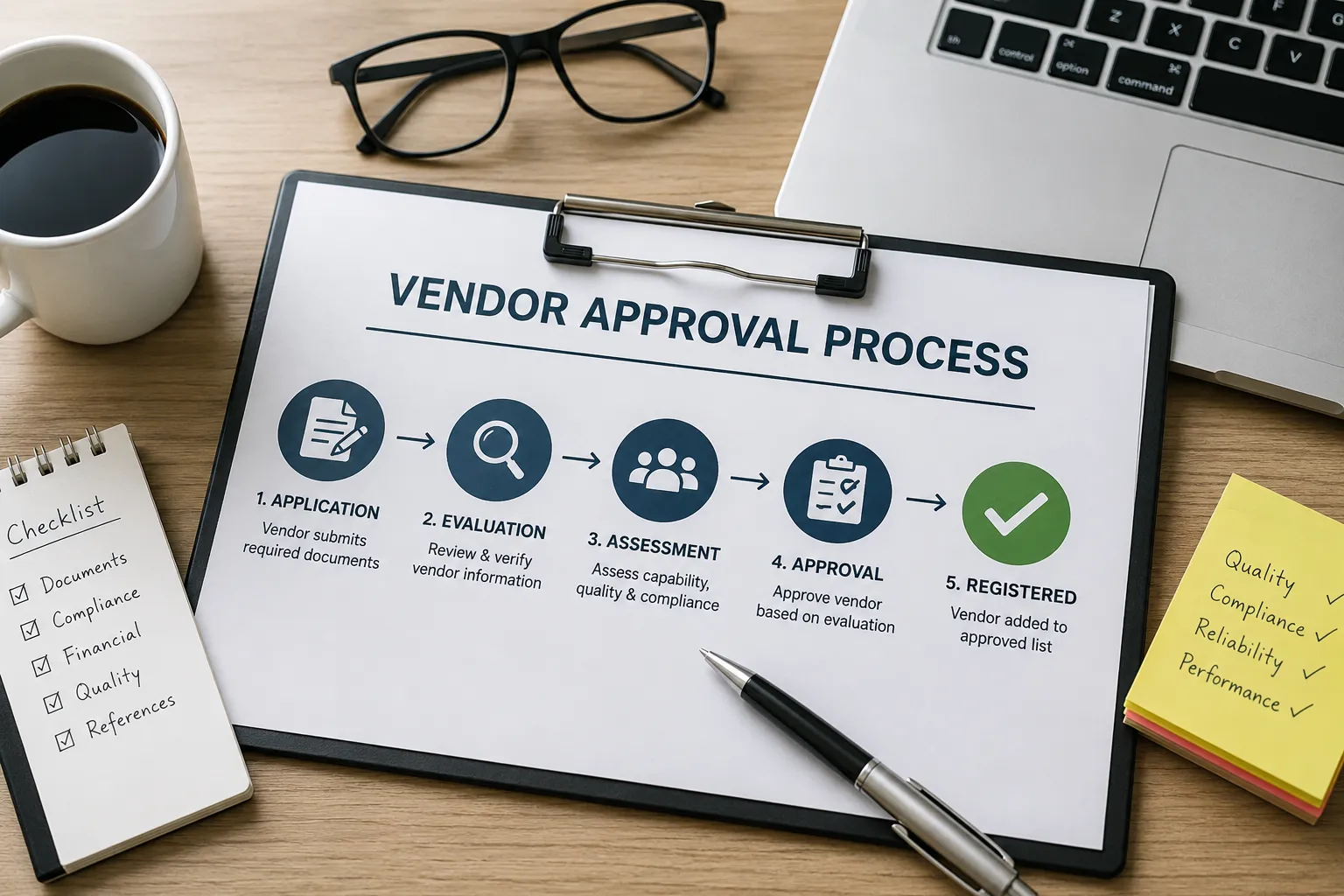
Vendor Approval Process: Complete Step-by-Step Guide for Indian Businesses (2026)
Every organization depends on vendors to supply raw materials, provide services, manage logistics, or support day-to-day operations. However, approving a vendor without proper verification can expose your business to compliance violations, operational disruptions, financial losses, and audit findings.
Many procurement teams still rely on emails, spreadsheets, and manual document verification when approving new vendors. As vendor networks grow, these manual processes become increasingly difficult to manage, resulting in missing documents, delayed approvals, and inconsistent decision-making.
A structured Vendor Approval Process helps organizations evaluate suppliers using standardized criteria before they are added to the approved vendor list. It ensures vendors meet legal, financial, operational, and compliance requirements while improving transparency and reducing procurement risks.
In this guide, you’ll learn how the vendor approval process works, the key stages involved, common challenges, best practices, and how organizations can automate vendor approvals using vendor compliance software.
Why a Vendor Approval Process Is Important
Approving a vendor is more than collecting documents. It is a critical risk management activity that ensures only qualified and compliant suppliers are allowed to do business with your organization.
Without a standardized approval process, organizations often face challenges such as:
- Vendors with expired licenses
- Missing GST or statutory registrations
- Incomplete compliance documentation
- Poor supplier performance
- Delayed procurement activities
- Failed compliance audits
- Increased operational risks
A formal vendor approval process helps organizations:
- Standardize supplier onboarding
- Reduce compliance risks
- Verify statutory registrations
- Improve procurement efficiency
- Maintain audit readiness
- Build stronger supplier relationships
- Ensure regulatory compliance
Vendor Approval Process Workflow
Although approval workflows differ across organizations, most follow a similar sequence of steps.
Step 1: Vendor Registration
The process begins when a prospective supplier expresses interest or is identified by the procurement team.
Basic information collected typically includes:
- Company Name
- Business Address
- Contact Details
- Products or Services Offered
- GST Number
- PAN Number
This information forms the basis of the vendor profile.
Step 2: Document Collection
The procurement or compliance team requests mandatory documents from the vendor.
Typical documents include:
- Certificate of Incorporation
- GST Registration Certificate
- PAN Card
- Udyam Registration (if applicable)
- Factory License
- Labour License
- PF Registration
- ESIC Registration
- Insurance Certificates
- ISO Certifications
- Bank Details
- Cancelled Cheque
Document requirements may vary depending on the vendor category.
Step 3: Compliance Verification
Once documents are submitted, they should be verified for authenticity and validity.
Verification typically includes:
- GST Registration
- PAN Details
- Business Registration
- Labour Compliance
- License Validity
- Insurance Expiry
- ISO Certification Status
Expired or incomplete documents should be corrected before moving forward.
Step 4: Financial Evaluation
For strategic suppliers, organizations often assess financial stability.
Evaluation criteria include:
- Annual Turnover
- Financial Statements
- Creditworthiness
- Banking References
- Years in Business
Financially stable suppliers are generally better positioned to support long-term contracts.
Step 5: Technical and Operational Assessment
The organization evaluates whether the supplier has the capability to deliver products or services consistently.
Assessment areas include:
- Manufacturing Capacity
- Technical Expertise
- Machinery and Equipment
- Workforce Strength
- Delivery Capability
- Quality Systems
- Previous Experience
Critical suppliers may require a detailed technical audit.
Step 6: Risk Assessment
Not all vendors present the same level of risk.
Organizations commonly classify vendors based on:
- Business Criticality
- Compliance Risk
- Financial Risk
- Operational Risk
- Information Security Risk
- Geographic Risk
Higher-risk vendors may require additional approvals or more frequent compliance reviews.
Step 7: Internal Approval Workflow
After evaluation, the vendor is routed through an approval workflow.
Depending on the organization, approvals may involve:
- Procurement Manager
- Compliance Team
- Finance Department
- Legal Department
- Quality Assurance
- Senior Management
Using a standardized approval workflow ensures consistency and accountability.
Step 8: Vendor Creation
Once approved, the supplier is added to the organization’s Approved Vendor List (AVL).
Vendor records generally include:
- Vendor Code
- Business Details
- Compliance Documents
- Banking Information
- Risk Classification
- Approval Date
- Renewal Dates
The vendor can now participate in procurement activities.
Vendor Approval Checklist
Before approving a supplier, verify the following:
| Verification Area | What to Review | Example Documents |
|---|---|---|
| Company Verification | Legal identity | Certificate of Incorporation, PAN |
| Tax Compliance | Statutory registrations | GST Certificate |
| Business Licenses | Industry licenses | Factory License, Labour License |
| Insurance | Active policies | Public Liability Insurance |
| Financial Health | Stability | Financial Statements |
| Quality Certifications | Compliance standards | ISO 9001, ISO 14001 |
| Labour Compliance | Employee compliance | PF, ESIC |
| Technical Capability | Operational readiness | Machinery, Workforce |
| Risk Assessment | Supplier risk | Risk Assessment Report |
| Final Approval | Management approval | Approved Vendor Record |
Vendor Approval Process vs Vendor Onboarding
Although these terms are closely related, they represent different stages of the procurement lifecycle.
| Vendor Approval | Vendor Onboarding |
|---|---|
| Evaluates supplier eligibility | Registers approved supplier |
| Reviews compliance documents | Creates vendor master |
| Performs risk assessment | Configures payment information |
| Requires management approval | Enables purchasing activities |
| Results in Approved Vendor List | Begins operational relationship |
Vendor approval always occurs before vendor onboarding.
Best Practices for Vendor Approval
Organizations with mature procurement programs typically follow these best practices.
- Use standardized approval criteria for every supplier.
- Collect all required documents before approval.
- Verify statutory registrations independently.
- Maintain a digital repository of vendor documents.
- Use role-based approval workflows.
- Categorize vendors based on risk.
- Review vendor compliance periodically.
- Automate document expiry reminders.
Following these practices improves consistency while reducing supplier-related risks.
Common Mistakes to Avoid
Many organizations experience procurement delays because of inconsistent vendor approval practices.
Avoid these common mistakes:
- Approving vendors based only on price.
- Accepting expired compliance documents.
- Skipping financial evaluation.
- Ignoring contractor compliance.
- Managing approvals through email threads.
- Using spreadsheets without audit trails.
- Not reviewing vendor compliance after approval.
- Allowing incomplete documentation.
These mistakes often result in audit observations and operational disruptions.
Why Organizations Replace Manual Vendor Approval with Software
Many procurement teams still manage vendor approvals using spreadsheets, shared folders, and emails.
As supplier numbers grow, manual processes become difficult to manage.
Common challenges include:
- Missing documents
- Delayed approvals
- Manual reminders
- Poor visibility
- Duplicate records
- Difficult audit preparation
- No approval history
Modern vendor compliance software centralizes vendor information, automates approval workflows, tracks document expiry, and provides real-time compliance dashboards.
Frequently Asked Questions
What is the vendor approval process?
The vendor approval process is the structured method organizations use to evaluate suppliers before allowing them to provide products or services. It includes document verification, compliance checks, financial assessment, risk evaluation, and management approval.
Why is a vendor approval process important?
A structured approval process helps organizations reduce supplier risk, ensure regulatory compliance, improve procurement consistency, and maintain audit readiness.
What documents are required for vendor approval?
Typical documents include GST Registration Certificate, PAN Card, Certificate of Incorporation, Factory License, Labour License, PF Registration, ESIC Registration, insurance certificates, and ISO certifications.
What is the difference between supplier qualification and vendor approval?
Supplier qualification evaluates a supplier’s capability and compliance, while vendor approval is the formal internal decision to add the supplier to the Approved Vendor List after successful evaluation.
How often should approved vendors be reviewed?
Organizations should review vendors periodically, especially when compliance documents expire, contracts are renewed, or business risks change.
Can vendor approval be automated?
Yes. Vendor compliance software can automate document collection, approval workflows, document verification, renewal reminders, audit trails, and compliance dashboards, significantly reducing manual effort.
Conclusion
A structured vendor approval process is essential for building a reliable supplier network while reducing operational and compliance risks.
By standardizing document verification, compliance checks, financial assessments, and approval workflows, organizations can ensure that only qualified vendors become part of their supply chain.
As vendor databases continue to grow, managing approvals manually through spreadsheets becomes increasingly difficult. Dedicated vendor compliance software helps organizations centralize vendor records, automate approval workflows, improve audit readiness, and maintain complete visibility throughout the vendor lifecycle.