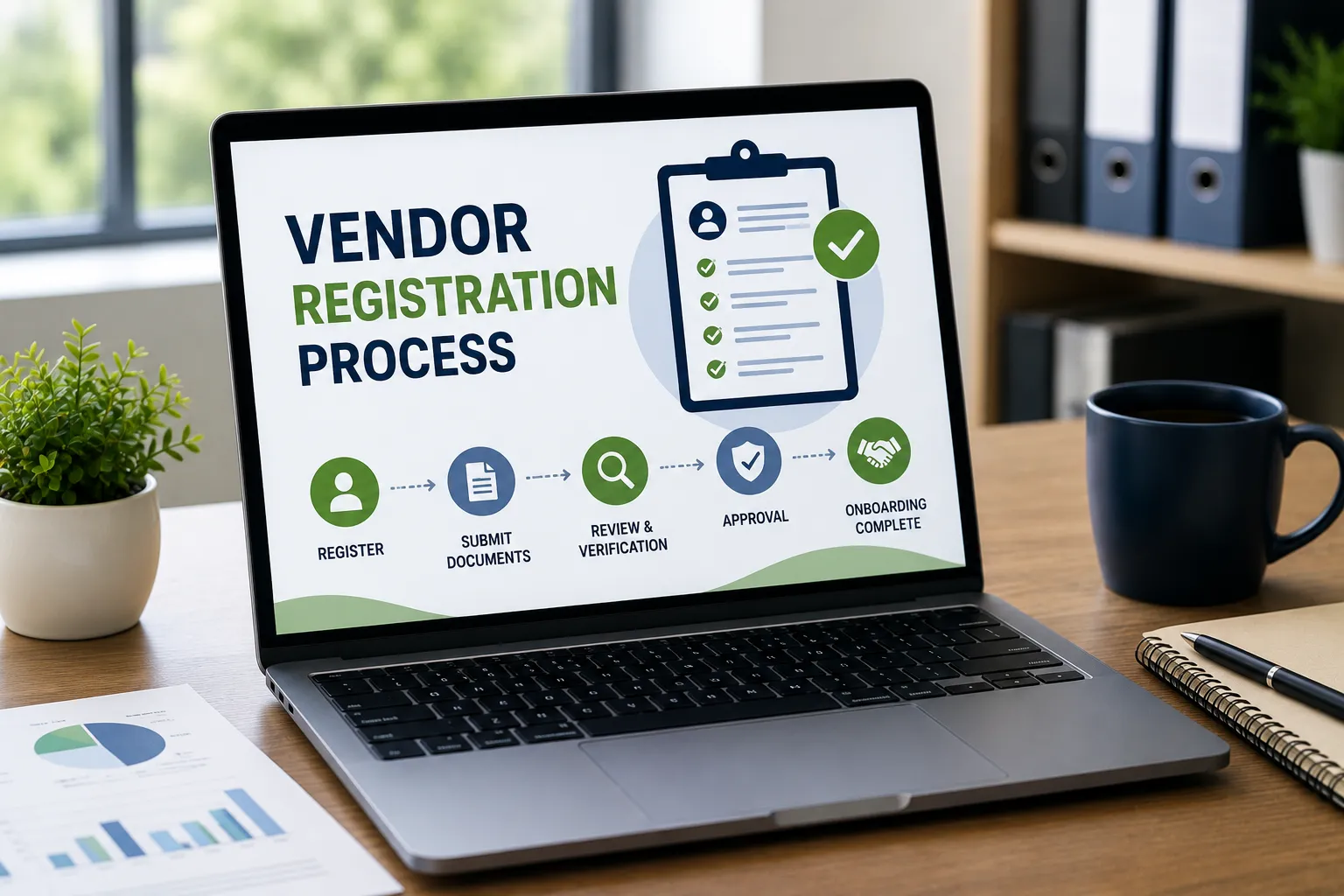
Vendor Registration Process: Step-by-Step Guide
Selecting the right suppliers is only the first step in procurement. Before a vendor can receive purchase orders or payments, they must complete the vendor registration process.
Many organizations still manage vendor registration using emails, spreadsheets, and paper forms. This often results in incomplete information, delayed approvals, duplicate records, and compliance issues.
A well-defined vendor registration process ensures that every supplier is properly verified, approved, and ready to do business with your organization.
In this guide, we’ll walk through the complete vendor registration process, required documents, common challenges, and best practices for procurement teams in 2026.
What Is Vendor Registration?
Vendor registration is the process of collecting and verifying a supplier’s business, financial, and compliance information before adding them to the organization’s approved vendor database.
The goal is to ensure that vendors meet your organization’s procurement, legal, financial, and compliance requirements before any business transactions begin.
Vendor registration is often the first stage of vendor onboarding.
Why Is Vendor Registration Important?
A structured registration process helps organizations:
- Verify supplier legitimacy
- Reduce procurement risks
- Ensure regulatory compliance
- Prevent duplicate vendor records
- Improve payment accuracy
- Speed up purchase order processing
- Maintain audit readiness
Without proper registration, organizations may unknowingly work with suppliers who have incomplete or expired compliance documents.
Step-by-Step Vendor Registration Process
A modern vendor registration process generally includes the following steps.
Step 1: Vendor Registration Request
The process begins when a supplier expresses interest in doing business or is nominated by a business unit.
Procurement shares a vendor registration form or provides access to an online vendor portal where the supplier can submit their details.
Step 2: Submit Company Information
The vendor provides basic business information, including:
- Company Name
- Registered Address
- Contact Details
- Business Type
- Industry
- Year of Establishment
- Website
- Authorized Contact Person
This information is used to create the initial vendor profile.
Step 3: Upload Required Documents
The supplier uploads all mandatory registration documents.
Common documents include:
- GST Registration Certificate
- PAN Card
- Certificate of Incorporation
- MSME/Udyam Certificate
- Bank Details
- Cancelled Cheque
- PF Registration
- ESIC Registration
- Labour License
- Insurance Certificates
- ISO Certifications (if applicable)
Missing documents should be identified before the review process begins.
Step 4: Document Verification
Procurement and compliance teams verify:
- Document authenticity
- Expiry dates
- Registration numbers
- Mandatory compliance requirements
- Business ownership details
Any discrepancies are returned to the vendor for correction.
Step 5: Risk Assessment
Organizations evaluate supplier risks before approval.
Typical assessment areas include:
- Financial stability
- Regulatory compliance
- Operational capability
- Cybersecurity
- Geographic risks
- Previous business performance
High-risk vendors may require additional approvals.
Step 6: Internal Approval
After verification, the vendor profile is reviewed by relevant stakeholders.
Typical approval workflow includes:
- Procurement Review
- Compliance Approval
- Finance Verification
- Legal Review (if required)
- Final Procurement Approval
Automation can significantly reduce approval delays.
Step 7: Vendor Creation
Once approved, the supplier is added to the organization’s vendor master database.
The organization assigns:
- Vendor ID
- Payment Terms
- Vendor Category
- Business Unit
- Contact Details
The supplier is now eligible to receive purchase orders.
Step 8: Ongoing Compliance Monitoring
Vendor registration should not end after approval.
Organizations should continuously monitor:
- Document expiry
- License renewals
- Insurance validity
- Compliance status
- Performance metrics
Continuous monitoring helps organizations remain audit-ready throughout the vendor relationship.
Vendor Registration Documents Checklist
| Document | Mandatory | Renewal Required |
|---|---|---|
| GST Registration | Yes | No |
| PAN Card | Yes | No |
| Certificate of Incorporation | Yes | No |
| Cancelled Cheque | Yes | No |
| Bank Details | Yes | No |
| MSME Certificate | Optional | No |
| PF Registration | Industry Specific | Yes |
| ESIC Registration | Industry Specific | Yes |
| Labour License | Industry Specific | Yes |
| Insurance Certificate | Often Required | Yes |
| ISO Certificate | Optional | Yes |
The required documents may vary depending on industry, country, and organizational policies.
Common Challenges in Vendor Registration
Many procurement teams experience similar challenges during vendor registration.
Incomplete Applications
Vendors often forget to upload mandatory documents, leading to repeated follow-ups.
Email-Based Registration
Documents sent through email become difficult to organize and retrieve during audits.
Duplicate Vendor Records
Without centralized registration, the same supplier may be registered multiple times.
Slow Approval Process
Manual approvals involving multiple departments can delay procurement activities.
Expired Compliance Documents
Some organizations approve vendors without tracking document expiry, increasing compliance risks.
Best Practices for Vendor Registration
To streamline the registration process, organizations should follow these best practices.
Use a Standard Registration Form
Every supplier should complete the same registration process to ensure consistency.
Create a Digital Vendor Portal
Allow vendors to register and upload documents through a secure online portal instead of email.
Verify Documents Before Approval
Ensure all mandatory documents are complete, valid, and up to date before activating the vendor.
Automate Approval Workflows
Replace manual email approvals with automated workflows that notify reviewers and track approval status.
Track Document Expiry
Configure automatic reminders for documents that require periodic renewal.
Maintain a Central Repository
Store all vendor information and supporting documents in one secure location with version history and audit trails.
Manual vs Digital Vendor Registration
| Manual Registration | Digital Registration |
|---|---|
| Paper forms and emails | Online registration portal |
| Manual document collection | Secure document uploads |
| Spreadsheet tracking | Centralized database |
| Slow approvals | Automated workflows |
| Difficult document search | Instant search and retrieval |
| Manual reminders | Automated notifications |
| Limited visibility | Real-time dashboards |
Digital registration improves efficiency while reducing compliance risks.
How VendorCompliancePro Helps
VendorCompliancePro simplifies vendor registration by providing a centralized platform for procurement and compliance teams.
With VendorCompliancePro, organizations can:
- Create online vendor registration forms
- Collect documents securely
- Configure custom document requirements
- Automate approval workflows
- Validate mandatory documents
- Track expiry dates automatically
- Send renewal reminders
- Maintain complete audit trails
- Store all vendor records in one place
- Monitor vendor compliance through dashboards
By replacing manual spreadsheets and email-based processes, VendorCompliancePro helps organizations register vendors faster while staying compliant.
Frequently Asked Questions
What is the vendor registration process?
Vendor registration is the process of collecting, verifying, and approving supplier information before they are authorized to do business with an organization.
What documents are required for vendor registration?
Common documents include GST Registration, PAN Card, Certificate of Incorporation, Bank Details, Insurance Certificates, PF Registration, ESIC Registration, Labour License, and other compliance documents based on industry requirements.
How long does vendor registration take?
The timeline depends on document availability and approval workflows. Organizations using automated vendor management software can often complete registration within a few days.
What is the difference between vendor registration and vendor onboarding?
Vendor registration focuses on collecting and verifying supplier information. Vendor onboarding is a broader process that includes registration, compliance verification, approvals, and supplier activation.
Can vendor registration be automated?
Yes. Modern vendor management platforms automate registration forms, document collection, approvals, expiry tracking, and compliance monitoring, reducing manual effort and improving efficiency.
Conclusion
An effective vendor registration process is the foundation of a strong procurement and supplier management program.
By standardizing registration, verifying documents, automating approvals, and continuously monitoring compliance, organizations can reduce risks, improve procurement efficiency, and remain audit-ready.
As procurement becomes increasingly digital, replacing manual registration with automated workflows will help organizations onboard suppliers faster and build stronger, more compliant vendor relationships.
Related Articles
- Vendor Onboarding Checklist (2026): Complete Procurement Guide
- Supplier Compliance Checklist
- Approved Vendor List (AVL): Complete Guide
- Approved Vendor vs Preferred Vendor
- Vendor Compliance Checklist India
- Vendor Audit Readiness Checklist
- What Is Vendor Compliance?
- 7 Reasons Vendor Documents Go Missing During Audits
- How AI Can Reduce Vendor Onboarding Time
- 10 Features Every Vendor Compliance Software Should Have