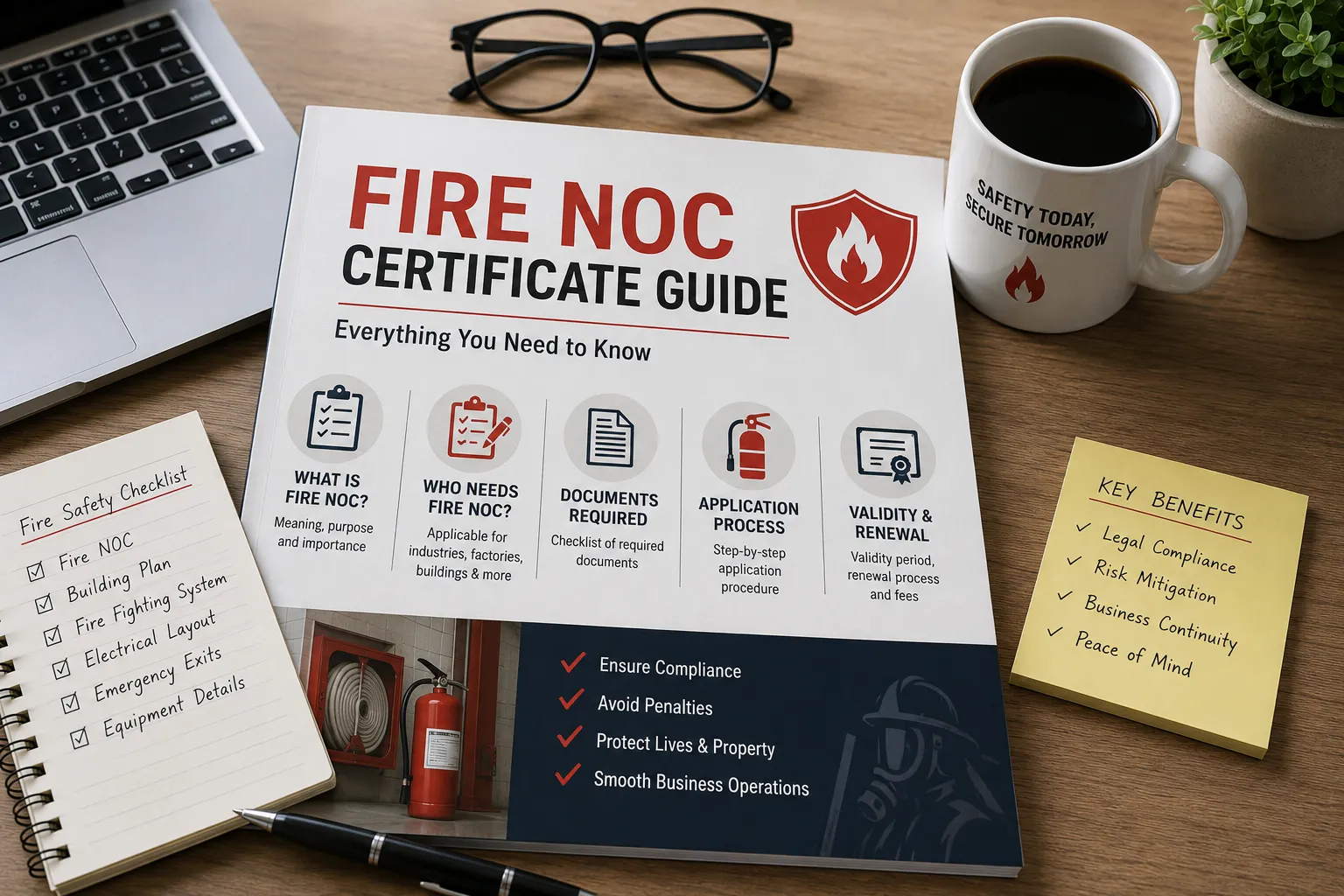
Fire NOC Certificate Guide: Requirements, Documents & Compliance for Indian Businesses (2026)
Fire safety is one of the most important aspects of workplace compliance. Manufacturing units, warehouses, commercial buildings, hospitals, educational institutions, hotels, and many other establishments are required to comply with applicable fire safety regulations before commencing operations.
One of the key documents demonstrating compliance is the Fire No Objection Certificate (Fire NOC). It confirms that a building has been inspected by the appropriate Fire Department and meets the prescribed fire safety requirements.
For procurement and compliance teams, the Fire NOC Certificate is also an important vendor document. Organizations frequently request this certificate during vendor onboarding and supplier qualification to ensure that manufacturing facilities and warehouses operate with appropriate fire safety measures.
In this guide, we’ll explain what a Fire NOC Certificate is, who requires it, the documents needed, how to obtain it, renewal requirements, and why it plays a vital role in vendor compliance.
What Is a Fire NOC Certificate?
A Fire No Objection Certificate (Fire NOC) is an approval issued by the State Fire Department after verifying that a building complies with applicable fire safety regulations.
The certificate indicates that adequate fire prevention, detection, and firefighting systems have been installed and that the premises satisfy prescribed fire safety requirements.
A Fire NOC is commonly required for:
- Manufacturing units
- Warehouses
- Commercial buildings
- Shopping malls
- Hotels
- Hospitals
- Educational institutions
- Industrial parks
- High-rise buildings
- Office complexes
Many organizations include the Fire NOC Certificate as part of their mandatory vendor compliance documentation.
Why Is a Fire NOC Certificate Important?
Fire incidents can cause severe damage to employees, property, production, and business continuity.
A Fire NOC helps organizations demonstrate that appropriate fire protection systems are in place and that the premises comply with applicable fire safety regulations.
Benefits include:
- Improved workplace safety
- Regulatory compliance
- Better audit readiness
- Reduced business risk
- Increased customer confidence
- Improved insurance support
- Enhanced supplier credibility
Procurement teams often request Fire NOC Certificates before approving manufacturing vendors and warehouse operators.
Who Needs a Fire NOC Certificate?
The requirement depends on the nature of the building, occupancy type, size, and applicable state regulations.
Industries and establishments commonly requiring a Fire NOC include:
- Manufacturing Companies
- Warehouses
- Logistics Parks
- Engineering Companies
- Pharmaceutical Plants
- Textile Industries
- Chemical Industries
- Packaging Units
- Shopping Malls
- Hotels
- Hospitals
- Educational Institutions
- High-rise Commercial Buildings
Requirements may vary between states and local fire authorities.
Information Available on a Fire NOC Certificate
A Fire NOC generally contains:
- Certificate Number
- Building Name
- Building Address
- Owner or Occupier Name
- Type of Occupancy
- Date of Issue
- Validity Period
- Fire Department Details
- Inspection Reference Number
- Conditions of Approval
Procurement teams should verify that the information matches other vendor documents.
Documents Required for Fire NOC
Although document requirements differ slightly by state, common documents include:
- Building Approval Plan
- Occupancy Certificate (where applicable)
- Building Layout Plan
- Identity Proof of Owner
- Address Proof
- Ownership or Lease Documents
- Factory License (if applicable)
- Fire Safety System Details
- Electrical Safety Certificate
- Lift Safety Certificate (where applicable)
- Structural Stability Certificate (where applicable)
Additional documents may be required depending on building type and occupancy.
Fire NOC Application Process
The application process is generally handled by the respective State Fire Department.
Step 1: Submit the Application
Apply through the prescribed online or offline process.
Step 2: Upload Required Documents
Provide building plans, ownership documents, fire safety details, and other supporting documents.
Step 3: Fire Safety Inspection
Fire Department officials inspect the premises to verify compliance.
Inspection generally includes:
- Fire extinguishers
- Fire hydrants
- Sprinkler systems
- Smoke detectors
- Emergency exits
- Fire alarms
- Exit signage
- Emergency lighting
- Water storage
- Fire pump systems
Step 4: Compliance Rectification
If deficiencies are identified, corrective measures must be completed before approval.
Step 5: Certificate Issuance
Once the premises satisfy the required safety standards, the Fire NOC Certificate is issued.
Fire NOC Renewal
In many jurisdictions, Fire NOCs require periodic renewal based on local regulations.
Organizations should:
- Monitor expiry dates.
- Schedule inspections before renewal.
- Maintain all fire protection systems.
- Test emergency equipment regularly.
- Update documents whenever major structural changes occur.
Missing renewal deadlines may affect business operations and insurance coverage.
How Procurement Teams Verify Fire NOC Certificates
During vendor onboarding, procurement teams generally verify:
- Building name
- Facility address
- Certificate number
- Date of issue
- Validity period
- Occupancy classification
- Fire authority details
- Consistency with other submitted documents
Maintaining verified copies improves compliance and simplifies customer audits.
Common Fire Safety Systems Verified During Inspection
A Fire NOC inspection typically reviews the availability and condition of:
- Fire Extinguishers
- Fire Hydrant System
- Automatic Sprinklers
- Smoke Detection System
- Fire Alarm System
- Emergency Exit Routes
- Emergency Lighting
- Exit Sign Boards
- Fire Water Storage Tanks
- Fire Pumps
- Hose Reels
The required systems vary depending on building type and occupancy.
Fire NOC vs Occupancy Certificate
These documents serve different purposes.
| Fire NOC | Occupancy Certificate |
|---|---|
| Confirms fire safety compliance | Confirms building is fit for occupancy |
| Issued by Fire Department | Issued by Local Building Authority |
| Focuses on fire protection systems | Focuses on construction compliance |
| Required for many industrial and commercial premises | Required before occupying completed buildings |
Organizations may request both documents depending on the vendor’s facility.
Best Practices for Managing Fire NOC Certificates
Organizations with mature vendor compliance programs typically:
- Collect Fire NOC Certificates during vendor onboarding.
- Verify certificate validity before supplier approval.
- Track renewal dates automatically.
- Maintain digital copies in a centralized repository.
- Review supporting safety documents.
- Perform periodic compliance reviews.
- Maintain document approval history for audits.
These practices improve compliance visibility and reduce supplier risks.
Common Mistakes to Avoid
Many organizations overlook important verification steps.
Avoid these common mistakes:
- Accepting expired Fire NOCs.
- Not verifying building address.
- Ignoring renewal dates.
- Failing to maintain digital records.
- Not reviewing supporting fire safety documents.
- Managing certificates only through email.
- Assuming one certificate applies to multiple facilities.
Proper document management helps prevent these issues.
Why Vendor Compliance Software Helps
Managing Fire NOC Certificates manually becomes increasingly difficult as supplier networks grow.
Vendor compliance software helps organizations:
- Store Fire NOC Certificates securely.
- Track expiry dates.
- Automate renewal reminders.
- Maintain approval workflows.
- Generate compliance reports.
- Improve audit readiness.
- Centralize all vendor documents.
This significantly reduces manual effort while improving supplier compliance visibility.
Frequently Asked Questions
What is a Fire NOC Certificate?
A Fire No Objection Certificate (Fire NOC) is an approval issued by the appropriate Fire Department confirming that a building complies with applicable fire safety requirements.
Who requires a Fire NOC?
Manufacturing units, warehouses, commercial buildings, hospitals, hotels, educational institutions, and various industrial facilities may require a Fire NOC depending on applicable laws and local regulations.
What documents are required for a Fire NOC?
Common documents include approved building plans, ownership documents, building layout, fire safety system details, electrical safety certificates, and other supporting documents required by the relevant authority.
Does a Fire NOC require renewal?
Yes. In many jurisdictions, Fire NOCs require periodic renewal. Organizations should follow the renewal requirements applicable in their state and ensure certificates remain valid.
Why do companies request Fire NOC Certificates during vendor onboarding?
Organizations verify Fire NOC Certificates to ensure manufacturing facilities and warehouses comply with fire safety regulations and meet supplier qualification requirements.
Can vendor compliance software manage Fire NOC Certificates?
Yes. Vendor compliance software can securely store Fire NOC Certificates, automate renewal reminders, maintain approval workflows, and improve audit readiness by centralizing vendor documentation.
Conclusion
A Fire NOC Certificate is one of the most important safety and compliance documents for manufacturing facilities, warehouses, and commercial buildings in India.
For suppliers, it demonstrates compliance with applicable fire safety regulations. For procurement teams, it provides assurance that vendor facilities have been inspected and meet prescribed safety requirements.
As organizations manage an increasing number of suppliers, tracking Fire NOC Certificates manually becomes time-consuming and prone to errors. A centralized vendor compliance platform helps automate document management, monitor renewal dates, and maintain complete visibility into vendor safety compliance.