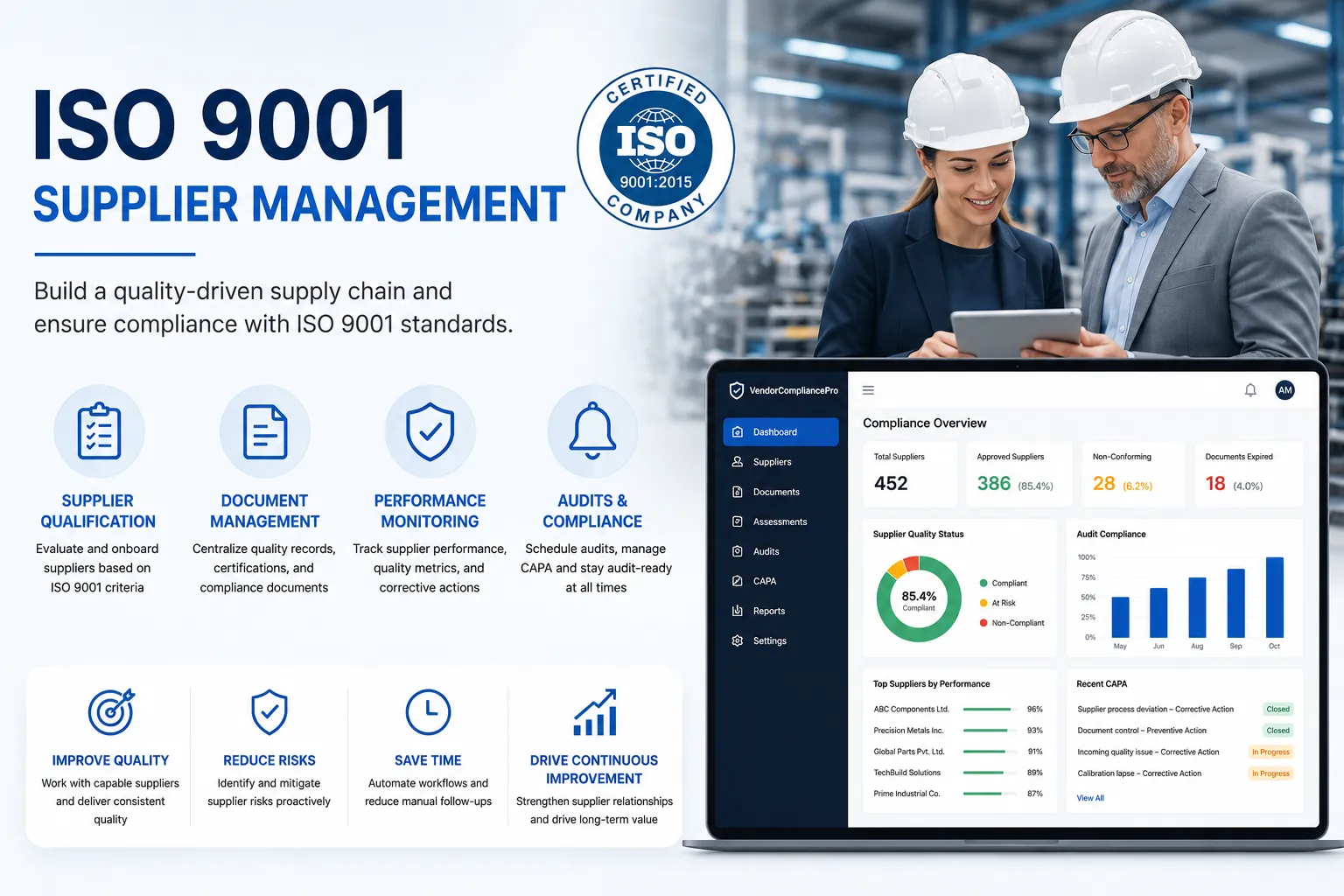
ISO 9001 Supplier Management: Complete Guide for Manufacturing Companies (2026)
Suppliers play a critical role in product quality. If purchased materials or outsourced services fail to meet requirements, customer satisfaction and business performance can suffer. ISO 9001 Supplier Management provides a structured approach to selecting, evaluating, monitoring, and improving suppliers as part of a Quality Management System (QMS).
For manufacturing companies, engineering firms, automotive businesses, logistics providers, and food processors, effective supplier management supports consistent quality, regulatory compliance, and continuous improvement.
What is ISO 9001 Supplier Management?
ISO 9001 requires organizations to control externally provided products and services. This includes defining supplier selection criteria, evaluating supplier performance, maintaining records, and taking action when supplier performance falls below expectations.
Supplier management is not a one-time activity—it continues throughout the supplier lifecycle.
Why is It Important?
Without a structured supplier management process, organizations may experience:
- Inconsistent product quality
- Delivery delays
- Non-conforming materials
- Audit observations
- Increased supplier risk
- Poor traceability
| Manual Supplier Management | ISO 9001-Based Management |
|---|---|
| Spreadsheet records | Centralized supplier database |
| Inconsistent reviews | Defined evaluation criteria |
| Manual follow-ups | Automated reminders |
| Limited visibility | Performance dashboards |
| Reactive actions | Continuous improvement |
Who Should Use It?
| Industry | Recommended |
|---|---|
| Manufacturing | ✅ |
| Automotive | ✅ |
| Engineering | ✅ |
| Food Processing | ✅ |
| Pharmaceuticals | ✅ |
| Logistics | ✅ |
Key ISO 9001 Supplier Management Activities
- Supplier qualification
- Vendor onboarding
- Supplier risk assessment
- Compliance document verification
- Performance evaluation
- Corrective action tracking
- Periodic supplier reviews
- Requalification and renewal
Supplier Evaluation Criteria
A balanced evaluation may include:
| KPI | Example Target |
|---|---|
| On-time delivery | ≥95% |
| Product quality | ≥98% acceptance |
| Compliance status | 100% valid documents |
| Response time | <24 hours |
| Corrective action closure | Within agreed timeline |
Key Benefits
- Better supplier quality
- Improved audit readiness
- Reduced procurement risk
- Objective supplier evaluations
- Better compliance visibility
- Continuous supplier improvement
- Stronger customer confidence
Essential Software Features
Choose software that offers:
- Vendor Self-Service Portal
- Supplier approval workflows
- Document management
- Compliance tracking
- Vendor performance scorecards
- Automated reminders
- Audit trail
- Reports and dashboards
- AI/OCR document validation
- API integration
Real Manufacturing Example
A precision engineering company supplying automotive customers reviews over 180 suppliers every quarter. By tracking supplier quality, delivery performance, compliance documents, and corrective actions in one platform, the quality team quickly identifies underperforming suppliers and documents evidence for ISO 9001 audits.
Supplier Management Workflow
- Supplier registration
- Document collection
- Qualification review
- Approval
- Performance monitoring
- Corrective actions
- Periodic re-evaluation
- Renewal or delisting
Buying Checklist
Before selecting supplier management software, verify it includes:
- Supplier master database
- Performance scorecards
- Compliance tracking
- Document expiry reminders
- Approval workflows
- Audit trail
- Dashboards
- Reporting
- AI/OCR validation
- API support
Common Mistakes
- Selecting suppliers based only on price
- Skipping periodic evaluations
- Not tracking supplier KPIs
- Ignoring document expiries
- Manual record keeping
- Missing corrective action history
- Poor audit documentation
Best Practices
- Define supplier evaluation criteria.
- Review strategic suppliers regularly.
- Track quality and compliance together.
- Maintain complete supplier records.
- Monitor trends using dashboards.
- Continuously improve supplier performance.
Why VendorCompliancePro?
VendorCompliancePro supports ISO 9001 supplier management by providing:
- Vendor onboarding
- Compliance document management
- Vendor performance scorecards
- Automated document expiry reminders
- Approval workflows
- AI-powered document validation
- Audit trails
- Dashboards and analytics
The platform helps procurement and quality teams maintain supplier records, monitor compliance, and prepare for ISO audits.
Frequently Asked Questions
Does ISO 9001 require supplier evaluation?
Yes. ISO 9001 requires organizations to evaluate, select, monitor, and re-evaluate suppliers based on their ability to meet requirements.
What supplier records should be maintained?
Supplier approvals, performance reviews, compliance documents, corrective actions, contracts, and evaluation history.
How often should suppliers be reviewed?
Review frequency depends on supplier criticality, but many organizations conduct quarterly or annual evaluations.
Can VendorCompliancePro support ISO 9001 compliance?
Yes. VendorCompliancePro helps manage supplier documents, approvals, performance, reminders, dashboards, and audit-ready records.
Conclusion
ISO 9001 Supplier Management helps organizations build a reliable, high-quality supply chain through structured supplier evaluation and continuous monitoring. By combining supplier performance metrics with vendor compliance management, businesses can improve quality, reduce risk, and stay audit-ready.