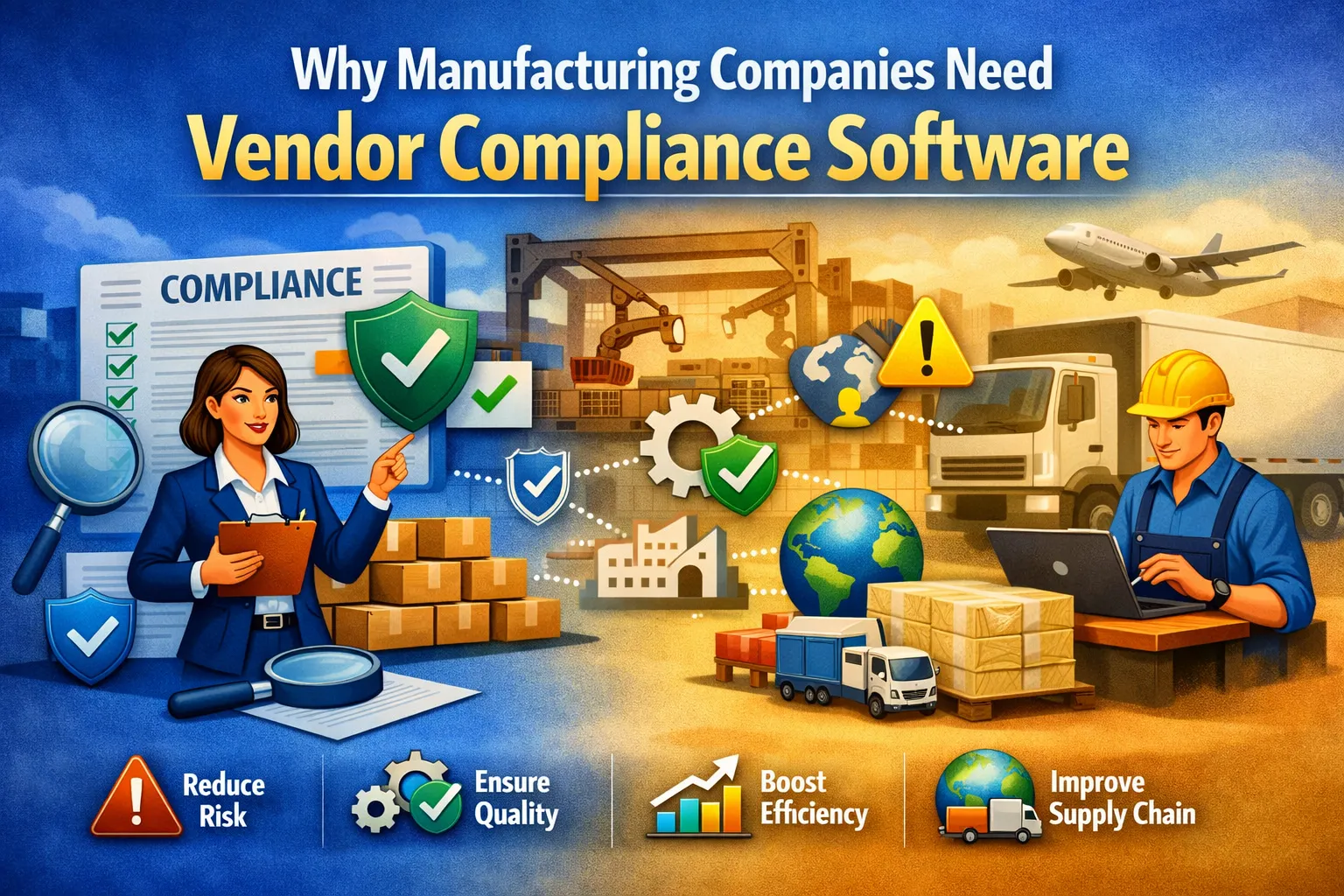
Why Manufacturing Companies Need Vendor Compliance Software in 2026
Manufacturing companies operate in an increasingly regulated environment where supplier compliance is just as important as production efficiency. Every supplier, contractor, transport vendor, maintenance company, and service provider must meet legal, safety, and organizational requirements before entering a manufacturing facility.
As supply chains become more complex, managing vendor compliance using spreadsheets and emails is no longer sustainable.
In 2026, more manufacturers are adopting vendor compliance software to automate document collection, monitor compliance continuously, improve audit readiness, and reduce operational risks.
This guide explains why vendor compliance software has become an essential investment for manufacturing companies.
The Growing Complexity of Manufacturing Supply Chains
A modern manufacturing plant may work with hundreds of external vendors.
These often include:
- Raw material suppliers
- Packaging suppliers
- Transport companies
- Contract labour agencies
- Maintenance contractors
- Security agencies
- Housekeeping vendors
- Machine service providers
- Calibration companies
- Waste management vendors
Each vendor must submit and maintain multiple compliance documents.
Managing these documents manually quickly becomes overwhelming.
Compliance Requirements Continue to Increase
Manufacturers must comply with:
- Labour laws
- Factory safety regulations
- Environmental regulations
- Customer audit requirements
- Insurance requirements
- Contractor compliance policies
- Internal procurement policies
Vendor compliance software helps ensure these requirements are managed consistently.
Common Challenges Manufacturing Companies Face
Many manufacturing organizations still rely on:
- Excel spreadsheets
- Email follow-ups
- Shared folders
- Paper files
These methods often create problems such as:
- Missing vendor documents
- Expired licences
- Slow contractor onboarding
- Lost documents
- Manual approval delays
- Poor compliance visibility
- Stressful customer audits
As operations expand across multiple plants, these issues become even more difficult to manage.
Why Manual Compliance No Longer Works
Manual processes depend heavily on employees remembering to:
- Collect documents
- Track expiry dates
- Send reminder emails
- Update spreadsheets
- Prepare audit reports
As vendor numbers grow, manual work increases while visibility decreases.
Automation becomes essential.
How Vendor Compliance Software Helps
Vendor compliance software centralizes the entire compliance process.
Instead of managing information across multiple systems, organizations can handle everything from one platform.
Typical capabilities include:
- Vendor registration
- Document collection
- Secure document storage
- Approval workflows
- Expiry tracking
- Compliance dashboards
- Audit reporting
- Vendor risk monitoring
Faster Vendor Onboarding
Manufacturing companies often need to onboard vendors quickly.
Without software, onboarding may involve:
- Multiple emails
- Manual document verification
- Spreadsheet updates
- Follow-up phone calls
Vendor compliance software allows vendors to upload documents directly through a secure portal while approvals move automatically through predefined workflows.
This significantly reduces onboarding time.
Better Document Management
Manufacturers collect many compliance documents.
Examples include:
Company Documents
- GST Registration Certificate
- PAN Card
- MSME Certificate
- Certificate of Incorporation
Labour Compliance
- PF Registration
- ESIC Registration
- Labour License
- Contractor License
Insurance
- Workmen Compensation Policy
- Public Liability Insurance
Employee Records
- Attendance Register
- Wage Register
- Salary Register
- Employee List
Safety Documents
- Safety Training Records
- PPE Compliance
- Risk Assessment Reports
Vendor compliance software keeps these documents organized and easily searchable.
Automated Expiry Tracking
One expired document can prevent a contractor from working on-site.
Instead of manually checking expiry dates, software automatically:
- Detects upcoming renewals
- Sends reminder emails
- Highlights expired documents
- Displays compliance status on dashboards
This reduces the risk of compliance failures.
Improved Audit Readiness
Manufacturing companies frequently undergo:
- Customer audits
- ISO audits
- Internal audits
- Safety audits
- Regulatory inspections
Vendor compliance software makes audits easier by providing:
- Centralized documentation
- Approval history
- Audit trails
- Compliance reports
- Real-time dashboards
Audit preparation that once took days can often be completed in minutes.
AI Is Changing Manufacturing Compliance
Modern vendor compliance software increasingly includes Artificial Intelligence.
AI helps manufacturing companies:
- Read documents using OCR
- Identify document types
- Detect expiry dates
- Extract registration numbers
- Validate uploaded documents
- Identify missing information
- Flag suspicious documents
Instead of manually reviewing every document, compliance teams review only exceptions.
Real-Time Compliance Visibility
Management should never have to ask:
- Which vendors are compliant?
- Which licences expire next month?
- Which contractors are awaiting approval?
- Which plants have compliance gaps?
Modern dashboards answer these questions instantly.
Real-time visibility enables faster and more informed decisions.
Multi-Plant Vendor Management
Many manufacturers operate multiple factories or warehouses.
Vendor compliance software allows organizations to:
- Manage vendors by plant
- Define plant-specific document requirements
- Monitor compliance separately for each location
- Generate plant-wise reports
This is difficult to achieve using spreadsheets.
Vendor Risk Management
Compliance is closely linked to operational risk.
Software helps identify vendors with:
- Missing documents
- Expired licences
- Repeated compliance failures
- Delayed submissions
- High compliance risk
This enables procurement teams to take corrective action early.
Manual Process vs Vendor Compliance Software
| Manual Process | Vendor Compliance Software |
|---|---|
| Excel tracking | Centralized platform |
| Email follow-ups | Automated reminders |
| Shared folders | Secure document repository |
| Manual approvals | Workflow automation |
| Manual expiry tracking | Automatic monitoring |
| Paper audit files | Digital audit reports |
| Reactive compliance | Continuous compliance monitoring |
Benefits for Manufacturing Companies
Organizations adopting vendor compliance software benefit from:
Faster Vendor Onboarding
Reduce onboarding time from weeks to days.
Better Compliance
Automatically monitor document validity.
Improved Audit Readiness
Generate audit reports instantly.
Reduced Administrative Work
Automate repetitive compliance tasks.
Better Supplier Relationships
Provide vendors with a faster and more transparent onboarding experience.
Lower Business Risk
Identify compliance issues before they disrupt operations.
Why VendorCompliancePro Is Built for Manufacturing
VendorCompliancePro is designed specifically for organizations managing supplier and contractor compliance.
Key capabilities include:
- Vendor self-service portal
- AI-powered document validation
- OCR document processing
- Centralized document repository
- Automated expiry reminders
- Approval workflows
- Compliance dashboards
- Vendor risk monitoring
- Audit reports
- Plant-wise management
- Role-based security
- Complete audit trails
The platform helps manufacturing companies reduce manual work while maintaining continuous compliance and audit readiness.
Frequently Asked Questions
Why do manufacturing companies need vendor compliance software?
Manufacturing companies work with numerous suppliers and contractors that must maintain valid compliance documents. Software automates document management, expiry tracking, approvals, and reporting.
Can vendor compliance software improve audit readiness?
Yes. Centralized documentation, audit trails, dashboards, and automated reports significantly simplify customer and regulatory audits.
How does AI help manufacturers?
AI reads compliance documents using OCR, detects expiry dates, validates document types, extracts important information, and reduces manual document verification.
Is vendor compliance software suitable for small manufacturers?
Yes. Cloud-based solutions are affordable and scalable, making them suitable for both small and large manufacturing companies.
What industries benefit besides manufacturing?
Logistics, warehousing, engineering, construction, food processing, pharmaceuticals, healthcare, and facility management also benefit from vendor compliance software.
Conclusion
In 2026, vendor compliance is no longer just an administrative responsibility—it’s a strategic business requirement.
Manufacturing companies must manage increasingly complex supplier networks, stricter regulatory requirements, and frequent customer audits while maintaining operational efficiency.
Vendor compliance software helps organizations automate document management, improve supplier onboarding, reduce compliance risks, and remain audit-ready throughout the year.
For manufacturers looking to modernize procurement and compliance processes, investing in dedicated vendor compliance software is no longer a luxury—it’s becoming a competitive advantage.
Related Articles
Buying Guides
- Best Vendor Compliance Software for Manufacturing Companies
- Best Vendor Compliance Software for Small Businesses
- Vendor Compliance Software Pricing Guide
- How to Choose Vendor Compliance Software
- 10 Features Every Vendor Compliance Software Should Have
- VendorCompliancePro vs Excel
Vendor Compliance
- What Is Vendor Compliance?
- Vendor Compliance Best Practices for Manufacturing
- Vendor Compliance Software India
- Vendor Document Management
- Vendor Audit Readiness Checklist
- Vendor Compliance Checklist India